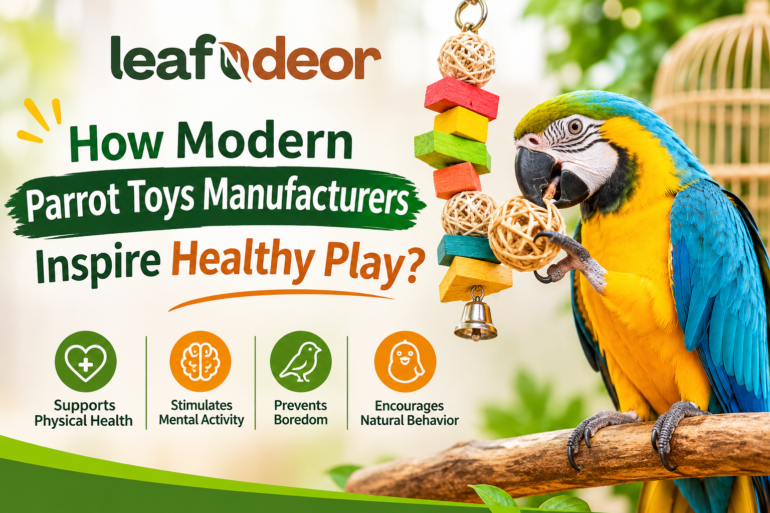
Have you ever watched a parrot spend several minutes investigating a simple wooden toy? What looks like ordinary play is often an important part of a bird’s daily life. Modern bird care increasingly recognizes the value of mental stimulation and physical activity, encouraging manufacturers to rethink how toys are designed, produced, and selected.
Today, a reliable parrot toys manufacturer does much more than create colourful accessories. The focus is shifting towards products that encourage natural behaviours, provide meaningful enrichment, and make everyday playtime safer and more engaging.
Why Healthy Play Matters for Parrots?
Parrots are naturally curious birds. In their natural surroundings, they spend considerable time exploring, climbing, chewing, searching for food, and interacting with their environment. A cage with little variety can limit these activities, which is why thoughtfully selected toys play such an important role in captive bird care.
Play offers opportunities for mental engagement and physical movement. For example, a foraging toy encourages a parrot to investigate different compartments to discover a hidden treat. A climbing structure invites movement, while a chewable wooden toy gives the bird an appropriate outlet for its natural chewing instincts.
In simple terms, good toys make a bird’s environment more interesting. They turn an ordinary day into a series of small discoveries.
How Modern Manufacturers Are Transforming Bird Toys?
1. Designs Inspired by Natural Behaviour
Modern bird toys are increasingly designed around the activities parrots naturally enjoy. Instead of focusing only on appearance, manufacturers consider how birds interact with different textures, shapes, and materials.
Some products encourage climbing and swinging, while others involve shredding, chewing, or finding concealed rewards. These activities can help make daily routines more varied and stimulating.
2. Greater Attention to Material Selection
Material quality is one of the most important considerations in bird toy manufacturing. Parrots explore objects with their beaks, so unsuitable finishes, toxic coatings, sharp components, or poorly selected materials can create unnecessary risks.
Responsible manufacturers pay attention to material suitability, construction quality, and the intended bird species. Natural wood, appropriately processed plant fibres, and other bird-safe components may be used depending on the toy’s design. However, natural does not automatically mean safe; every material still needs careful evaluation.
3. Interactive Toys That Encourage Exploration
Another noticeable development is the growing interest in interactive bird toys. These products invite parrots to participate rather than simply observe.
For example, puzzle feeders can encourage problem-solving, while toys with movable parts offer opportunities for investigation. Such designs help create a more engaging environment, particularly when owners rotate toys to maintain variety.
Features That Make a Parrot Toy Worth Choosing
Not every attractive toy is necessarily a suitable one. A well-designed product should match the bird’s size, beak strength, personality, and activity level. Manufacturers and bird owners should consider practical features before making a selection.
Here are some important qualities worth looking for:
- Bird-safe construction: Materials, dyes, finishes, and attachments should be suitable for the intended bird.
- Appropriate sizing: Toy dimensions and components should match the parrot species to reduce entrapment and swallowing risks.
- Different textures: A combination of suitable materials can encourage investigation and natural chewing behaviour.
- Durable assembly: Secure fittings and careful construction help prevent toys from breaking into hazardous pieces.
- Enrichment value: Toys should offer meaningful activities such as climbing, shredding, foraging, or problem-solving.
The Growing Importance of Natural Bird Toys
Natural materials have become an important part of conversations about responsible bird enrichment. Wooden blocks, untreated plant-based components, and suitable shredding materials can offer interesting textures and activities for curious parrots.
A dedicated natural bird toys manufacturer can contribute to better product choices by focusing on material suitability, thoughtful construction, and designs that support natural play behaviours.
However, bird owners should remember that different species have different needs. A toy suitable for a small budgie may not be appropriate for a large macaw. Supervision is also important, especially when introducing unfamiliar toys or products containing ropes, bells, chains, or small attachments.
How to Choose Toys That Keep Parrots Engaged?
Choosing the right toy does not need to be complicated. Start by observing your bird. Does it enjoy chewing, climbing, swinging, or searching for food? Its behaviour can provide useful clues about the types of enrichment it may enjoy.
For additional guidance, explore How to Choose the Best Toys for Your Bird: Important Considerations.
Bird owners can also follow a few practical habits:
- Rotate toys regularly: Introduce variety rather than keeping every toy in the same position indefinitely.
- Observe play preferences: Notice which activities attract your parrot and choose similar enrichment options.
- Inspect toys frequently: Remove damaged items, loose parts, frayed ropes, or components that could become hazardous.
- Introduce new toys gradually: Some parrots are cautious around unfamiliar objects, so give them time to investigate.
Frequently Asked Questions
1. Why are toys important for parrots?
Toys provide opportunities for mental stimulation, physical activity, and natural behaviours such as chewing, climbing, and foraging. They also help make a bird’s living environment more engaging.
2. What materials are suitable for parrot toys?
Suitable materials may include appropriately processed natural wood, bird-safe plant fibres, and other carefully selected components. Owners should check material safety, finishes, and construction before introducing any toy.
3. How often should parrot toys be replaced?
There is no universal replacement schedule. Inspect toys regularly and replace them whenever they become damaged, develop loose components, or present potential safety hazards. Chewable toys may need more frequent replacement.
4. How can I encourage my parrot to play with new toys?
Introduce unfamiliar toys gradually and place them where your bird can observe them comfortably. Choose designs that match its interests, and avoid forcing interaction. Patience often makes a difference.
Final Thoughts
Modern parrot toy manufacturers are helping make bird enrichment more thoughtful by combining creative designs, suitable materials, and an understanding of natural behaviour. For bird owners, the real goal is not to fill a cage with accessories but to create an environment where curiosity and healthy activity have room to grow. After all, a little meaningful play can make an ordinary day much more rewarding for a parrot.
Listen Here: Click Now