
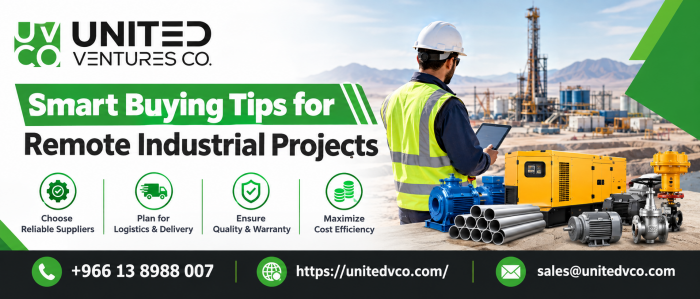
Remote projects in Saudi Arabia rarely offer the convenience of a well-equipped urban site. Long distances, intense heat, limited storage, and difficult access can turn a seemingly simple equipment purchase into an expensive headache. So, what should contractors and project managers check before ordering wholesale industrial equipment for an isolated worksite?
Start With the Actual Site Conditions
The equipment that works perfectly in a central workshop may struggle at a desert construction site. Before comparing brands or prices, look at the environment where the equipment will actually operate. Saudi projects can involve high temperatures, dust, uneven ground, long transport routes, and limited access to maintenance facilities.
Think beyond the equipment itself. A crane support accessory, lifting product, safety system, or industrial mat must work alongside the vehicles, tools, and procedures already used by your crew.
- Temperature: Check whether materials and components are suitable for the expected operating conditions.
- Dust and sand: Consider sealing, cleaning requirements, and exposure of moving or sensitive components.
- Ground conditions: Remote sites may require equipment designed for loose, uneven, or temporary surfaces.
- Access: Confirm that the equipment can be transported, unloaded, positioned, and removed without unnecessary delays.
Check Durability Before Chasing a Low Price
A lower purchase price can look attractive on a spreadsheet. But remote projects make downtime particularly costly. If a critical piece of equipment fails several hours away from the nearest supplier or service centre, the real expense may include idle labour, transport, replacement parts, and schedule disruption.
For this reason, buyers should examine construction quality, load ratings, material specifications, expected service life, and maintenance requirements. Ask suppliers how the equipment is intended to perform under demanding working conditions rather than simply asking whether it is “heavy duty.”
Consider Transport, Storage and Handling
Remote-project equipment has to survive more than its working environment. It may be loaded onto trucks, moved between locations, stored outdoors temporarily, and handled repeatedly by different crews.
A practical buying checklist should include:
- Equipment dimensions and total weight.
- Loading and unloading requirements.
- Storage conditions and protection from weather or contamination.
- Whether replacement components can be transported efficiently.
- How easily workers can inspect and reposition the equipment on site.
Safety Should Be Part of the Purchase Decision
Safety equipment and supporting industrial products should never be treated as an afterthought. For lifting, access, work-at-height, material handling, and other hazardous activities, verify that the selected products have appropriate ratings, documentation, inspection requirements, and instructions for use.
For projects involving work at height, it is also useful to understand how different fall-protection components function together. This guide on How Self-Retracting Lifelines Support Safer Work At Height? provides additional context when evaluating fall-protection requirements.
Evaluate the Supplier, Not Just the Product
In a remote project, the supplier relationship can matter almost as much as the equipment specification. A dependable supplier should be able to provide clear technical information, product documentation, availability details, and practical support when questions arise.
This is where comprehensive industrial equipment solutions can simplify procurement. Instead of treating every purchase as an isolated transaction, project teams can assess equipment, accessories, safety requirements, and replenishment needs as one connected system.
Questions Worth Asking a Supplier
- Is the product suitable for the intended environmental and operating conditions?
- What technical documentation and inspection information is supplied?
- Are replacement parts or compatible accessories readily available?
- What are the recommended inspection and maintenance intervals?
- Can the supplier support repeat orders as the project expands?
Don’t Ignore Total Cost of Ownership
The purchase invoice tells only part of the story. A sensible procurement decision considers the equipment’s complete lifecycle. Maintenance, transportation, spare parts, storage, inspection, replacement frequency, and downtime can all influence the final cost.
For example, equipment that costs slightly more initially but lasts considerably longer and requires fewer interventions may be more practical for a remote site. Conversely, an expensive product with complicated maintenance may create its own logistical burden. The right choice depends on the project’s duration, workload, environment, and operating plan.
FAQ
1. What is most important when buying equipment for remote Saudi projects?
Environmental suitability, durability, transport requirements, safety, maintenance support, and total ownership cost should all be assessed before purchase.
2. Why are site conditions important when selecting industrial equipment?
Heat, dust, uneven terrain, transportation distances, and limited service access can affect equipment performance, maintenance needs, and project productivity.
3. Should price be the main factor in equipment purchasing?
No. Purchase price is only one part of the decision. Reliability, service life, maintenance, logistics, safety, and replacement costs can significantly affect the overall investment.
4. What should contractors ask an industrial equipment supplier?
Contractors should ask about specifications, operating conditions, certifications or documentation, maintenance, replacement parts, availability, and ongoing supplier support.
Final Thoughts
Buying equipment for a remote project requires more than comparing catalogues and prices. In Saudi Arabia, successful procurement means thinking several steps ahead: where the equipment will operate, how it will reach the site, how workers will use it, and what happens when maintenance is needed. A careful decision at the purchasing stage can prevent costly surprises once the project is underway.
Full Audio: Listen Here
