Building a durable home or commercial space requires more than attractive designs and quality finishes. The materials hidden behind walls, furniture, flooring and interior structures play an equally important role in determining how well a building performs over time. Among these materials, termite-resistant structural plywood has become an important consideration for homeowners, architects, contractors and furniture manufacturers across India. Termites can gradually damage wood-based materials, weaken furniture components and create expensive maintenance problems. Choosing appropriately engineered plywood with suitable preservative treatment can help reduce these risks while supporting reliable construction. For projects requiring dependable structural performance, exploring a termite-resistant structural plywood supplier is a practical starting point.
Understanding Termite-Resistant Structural Plywood
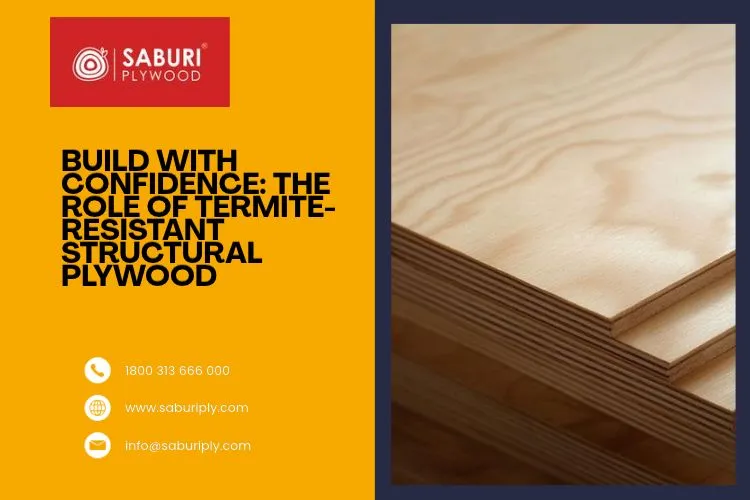
Structural plywood is an engineered wood panel manufactured by bonding multiple layers of wood veneer together, generally with the grain direction of adjacent layers arranged at right angles. This cross-laminated construction helps distribute loads, improve dimensional stability and provide strength across different directions. Structural plywood is designed for applications where mechanical performance and dependable construction characteristics matter.
Termite-resistant structural plywood combines structural engineering requirements with preservative protection intended to make the material less vulnerable to termite attack. Its effectiveness depends on the timber, manufacturing process, adhesive system, preservative formulation, treatment method and quality-control procedures. It is important to understand that structural strength and termite resistance are separate characteristics. A board should be evaluated for both rather than assuming that one automatically guarantees the other.
For Indian buyers, IS 10701 is an important reference because it covers structural plywood specifications. However, buyers should also verify the manufacturer’s specific termite-treatment claims and supporting product documentation. This distinction helps prevent confusion between structural-grade certification and additional pest-resistance features.
Why Termite Protection Matters in Indian Construction
India experiences different climatic conditions, from humid coastal environments to regions with seasonal rainfall and extended dry periods. Termite activity can become a concern in buildings where wood-based materials are exposed to favourable environmental conditions. Damp areas, poorly ventilated spaces, ground contact and untreated timber can increase vulnerability.
Termites feed on cellulose, which is present in natural wood and many other plant-based materials. They can enter buildings through soil, foundation gaps, cracks and concealed pathways. Their activity may remain unnoticed until visible damage appears in furniture, wooden frameworks, doors or other building components.
This is why preventive material selection matters. Termite-resistant plywood can provide an additional protective layer in applications involving wood-based panels. It may help reduce the likelihood of termite-related deterioration and support longer service life when correctly manufactured, selected and installed.
How Does Termite-Resistant Plywood Work?
Termite-resistant plywood generally relies on preservative treatments designed to discourage or prevent termite damage. Depending on the manufacturing technology, preservatives may be introduced into the wood through controlled treatment processes. The purpose is to improve protection beyond what untreated wood can provide.
1. Preservative Treatment
Preservative treatment is an important part of producing termite-resistant plywood. Suitable preservatives help protect vulnerable wood components against biological deterioration. Their performance depends on the chemical formulation, concentration, penetration, retention and compatibility with the plywood manufacturing process.
2. Vacuum Impregnation Technology
Vacuum impregnation is a treatment method that uses controlled pressure conditions to facilitate preservative penetration into wood. Depending on the manufacturing system and timber characteristics, the process can help achieve more consistent treatment than simply applying a protective coating to the finished surface.
The advantage of this approach is that protection is not intended to remain limited to the visible outer face. However, the actual effectiveness depends on the treatment specifications, preservative retention and appropriate quality testing. Buyers should request product-specific information instead of relying entirely on general marketing descriptions.
3. Cross-Laminated Veneer Construction
Plywood uses multiple veneer layers arranged in a cross-laminated structure. This construction helps distribute loads and reduces the likelihood of dimensional movement compared with certain solid-wood components. Strong bonding and consistent veneer quality also contribute to the board’s overall performance.
It is important to remember that cross-lamination primarily contributes to mechanical performance and stability. It does not independently make plywood termite-proof. Preservative protection and manufacturing quality must be considered separately.
Why Structural Plywood Quality Is Important
Structural plywood is selected for projects where the panel must contribute to the performance of an assembly rather than simply provide a decorative surface. Depending on the engineered design, applications may include flooring systems, roofing components, wall sheathing, partitions and other structural elements.
A quality structural panel should offer dependable bending strength, stiffness, bonding performance and dimensional consistency. These properties influence how the material behaves under different loads and environmental conditions.
The Bureau of Indian Standards identifies IS 10701:2012 as the structural plywood specification. Its official product manual discusses requirements and testing related to moisture content, adhesive bonding, water resistance, microorganism resistance, tensile strength, bending strength, compression and shear performance. Preservative retention is also included in the testing framework.
These technical requirements demonstrate why buyers should look beyond thickness and appearance. A thick board is not automatically a structurally suitable board. Its construction, tested properties and intended application must all be considered.
IS 10701 and Its Importance When Selecting Plywood
Indian Standards provide technical benchmarks that help manufacturers and buyers understand product requirements. IS 10701 is particularly relevant when evaluating structural plywood. It addresses construction, material characteristics, workmanship and performance requirements associated with this category.
The Bureau of Indian Standards product manual provides information about the inspection and testing framework used for structural plywood certification. It includes checks for structural properties and preservative retention. Buyers can consult the official BIS structural plywood product manual to understand the technical framework.
When purchasing structural plywood, customers should check the applicable standard marking, manufacturer’s details, product identification and supporting documentation. They should also confirm whether the specific product has additional termite-resistance treatment. An IS 10701 designation identifies the structural plywood category; it should not be treated as independent proof of every additional performance claim.
Important Applications of Termite-Resistant Structural Plywood
Termite-resistant structural plywood can be considered for different construction and interior applications, provided the selected product meets the project’s engineering and environmental requirements.
Residential Construction
Homeowners may use suitable structural plywood in engineered building components, furniture frameworks, partitions and other applications where panel strength is important. Termite protection can be particularly valuable in buildings with a history of pest activity, although professional site-level prevention remains necessary.
Commercial Interiors
Offices, hotels, retail establishments and institutional buildings often contain extensive wood-based installations. Cabinets, storage systems, partitions and furniture can benefit from appropriately selected plywood. Consistent panel quality can also make fabrication and installation more predictable.
Furniture Manufacturing
Furniture manufacturers need materials that maintain dimensional stability and support reliable assembly. Structural-grade plywood may be suitable for selected heavy-duty furniture applications, depending on the design and loading requirements. Termite-resistant treatment offers an additional consideration when choosing materials for long-term use.
Roofing and Flooring Systems
Structural plywood may be incorporated into engineered flooring and roofing assemblies. The correct thickness, support spacing, fastening method, moisture exposure and design loads must be determined by qualified professionals. Termite-resistant treatment should complement, not replace, appropriate construction detailing.
Structural Plywood vs Marine Plywood: Understanding the Difference
Structural plywood and marine plywood serve different technical purposes. This plywood is primarily evaluated for mechanical performance in structural applications. Marine plywood is intended for demanding moisture-exposure conditions and is manufactured to meet the relevant marine plywood requirements.
In India, IS 710 is the important marine plywood specification, while IS 10701 covers structural plywood. A buyer should not assume that a marine-grade panel automatically satisfies every structural design requirement or that all structural plywood is suitable for prolonged water exposure.
For applications requiring marine-grade performance, customers can explore marine plywood manufacturers in India and review the specifications of Saburi Gold. Its product information identifies it as IS 710 marine-grade plywood with boiling-water-proof bonding and termite-resistant features.
The right selection depends on the actual application, exposure conditions and applicable technical specifications. Architects, contractors and manufacturers should assess the product documentation before finalising materials.
How to Choose Quality Termite-Resistant Structural Plywood
Choosing the right plywood requires a combination of technical evaluation and practical purchasing checks. The following considerations can help buyers make an informed decision.
Check the Structural Grade
Confirm whether the plywood is manufactured and certified for the intended structural category. Look for the relevant IS designation, manufacturer identification and supporting certification details. For structural applications, verify that the product is appropriate for the loads and installation conditions specified by the project designer.
Understand the Preservative Treatment
Ask the manufacturer how the plywood is treated against termites and borers. Understand whether preservatives are introduced through pressure treatment, vacuum impregnation or another process. Request information about preservative retention and applicable testing wherever available.
Examine Veneer and Bonding Quality
Good-quality plywood should have consistent veneer construction, dependable bonding and a properly finished surface. Inspect the edges for visible gaps, separation or uneven construction. Delamination can compromise the usefulness of a panel and should not be overlooked.
Consider Moisture Exposure
Termite resistance and water resistance are separate characteristics. A termite-resistant panel may still require appropriate protection from prolonged moisture exposure. Choose the correct bonding grade for kitchens, bathrooms, coastal environments and other demanding locations.
Compare Warranty and Product Documentation
A clearly defined warranty can help buyers understand the manufacturer’s product commitments. Review its coverage, exclusions, validity and claim conditions. Keep invoices, product labels and relevant documentation for future reference.
How to Prevent Termite Damage Beyond Plywood Selection
Even high-quality termite-resistant plywood should be part of a broader preventive approach. Termites can enter buildings through multiple pathways, and protecting one wood-based material does not eliminate the possibility of infestation elsewhere.
The National Archives of India has published guidelines on controlling and preventing termite infestation. Although the document focuses on archives and libraries, its general preventive principles include drainage management, ventilation, regular inspection and suitable anti-termite measures during construction.
For additional guidance, consult the National Archives of India termite prevention guidelines.
Practical measures include:
- Maintain proper drainage around the building.
- Repair leaking pipes, roofs and plumbing connections promptly.
- Ensure adequate ventilation in enclosed spaces.
- Avoid unnecessary wood-to-soil contact.
- Remove construction debris and discarded timber from the site.
- Arrange professional anti-termite treatment where required.
- Inspect concealed wooden installations periodically.
These measures help address environmental and structural conditions that may encourage termite activity. If an infestation is already present, professional pest-control assessment is preferable to relying on surface spraying or replacing visibly damaged furniture alone.
Why Manufacturing Quality Matters
The performance of engineered plywood depends significantly on manufacturing consistency. Veneer preparation, adhesive application, pressing conditions, moisture control, preservative treatment and quality inspection all influence the finished board.
Automated manufacturing can improve process consistency when supported by calibrated equipment and appropriate quality-control procedures. Monitoring temperature, pressure and moisture conditions helps manufacturers maintain repeatable production standards. Testing also helps identify potential issues before products reach customers.
Saburi Ply, founded in 1990 by Mr. Gajanand Munka, combines manufacturing technology with a focus on product quality and responsible craftsmanship. Its portfolio includes structural plywood, marine plywood, blockboards, pre-laminated boards, WPC and PVC panels, flush doors and natural reinforced fibre composite panels.
For customers comparing a plywood supplier in India, it is useful to evaluate manufacturing standards, available product grades, treatment processes, technical support and product documentation together.
Exploring Sustainable Alternatives for Modern Interiors
Material selection is also becoming an important part of sustainable interior planning. While plywood uses wood veneers, alternative engineered panels can serve specific applications where conventional plywood may not be the only suitable choice.
Saburi Neowud is an example of a natural reinforced fibre composite panel made using rice husk and advanced binding technology. Its product information highlights termite and pest resistance, moisture resistance and applications in contemporary interior furniture and decorative installations.
Customers exploring a rice husk board supplier in India can consider this alternative when the design and application are compatible with composite panel construction. However, an alternative interior panel should not automatically be substituted for structural plywood in load-bearing applications. Material suitability must always be established against the intended use.
Common Mistakes to Avoid When Buying Structural Plywood
Selecting plywood solely on the basis of price, appearance or thickness can result in unsuitable material choices. Some common mistakes deserve particular attention.
- Confusing structural grade with termite resistance: Check both structural specifications and preservative-treatment information.
- Assuming waterproof means termite-proof: Water resistance and biological protection address different performance requirements.
- Ignoring product documentation: Ask for applicable standards, test information and warranty conditions.
- Using unsuitable grades: Match the plywood to its actual application and exposure conditions.
- Neglecting installation: Poor detailing, water leakage and untreated adjoining materials can increase building risks.
- Ignoring professional advice: Structural components should be selected and installed according to qualified design guidance.
FAQ
1. What is termite-resistant structural plywood?
Termite-resistant structural plywood is engineered plywood designed to provide structural performance along with preservative protection against termite damage. Its effectiveness depends on the treatment method, preservative retention, manufacturing quality and appropriate installation.
2. What is IS 10701 structural plywood?
IS 10701 is the Indian Standard specification for structural plywood. It addresses material, manufacturing, workmanship and performance requirements, including relevant structural testing. Buyers should separately verify any additional termite-resistance claims.
3. Does termite-resistant plywood completely prevent termite infestation?
No material should be treated as a complete substitute for building-level termite prevention. Treated plywood can provide additional protection, but proper drainage, professional pest management, ventilation and periodic inspections remain important.
4. Is termite-resistant plywood suitable for furniture?
It can be suitable for furniture applications when its thickness, grade, strength and finish match the design requirements. Structural-grade plywood may be particularly relevant for furniture requiring additional mechanical performance.
5. What is the difference between structural plywood and marine plywood?
Structural plywood is primarily designed around structural performance and is covered by IS 10701. Marine plywood follows IS 710 and is intended for demanding moisture-exposure applications. The appropriate grade depends on the intended use.
6. How can buyers identify quality termite-resistant plywood?
Check the product grade, manufacturer details, treatment process, preservative-retention information, applicable test documentation, bonding quality and warranty. Avoid relying exclusively on labels or verbal assurances.
Final Takeaway
Termite-resistant structural plywood can contribute to more durable construction by combining engineered panel strength with suitable preservative protection. However, long-term performance depends on more than a single product feature. Structural specifications, treatment quality, moisture management, professional installation and regular building maintenance must work together.
For homeowners, architects, builders and furniture manufacturers, choosing the right plywood means understanding the intended application and checking the evidence behind product claims. Saburi Ply offers structural-grade options such as Saburi Perennial, alongside marine-grade plywood and alternative engineered panels for different project requirements.
Explore the product range, review technical specifications and connect with Saburi Ply to discuss suitable material options. Build with informed choices today to support stronger, more reliable and longer-lasting spaces tomorrow.