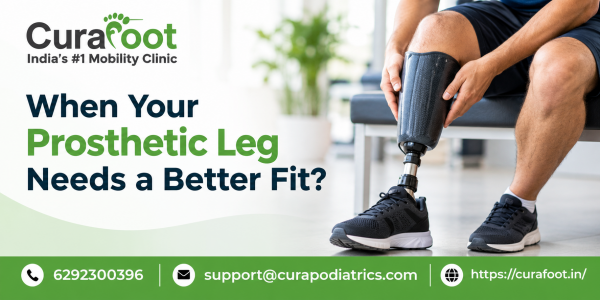
A below-knee prosthesis should feel supportive, stable, and reasonably comfortable as you move through your day. If it suddenly starts rubbing, slipping, or causing pain, do not simply assume you need to “get used to it.” For people in Kolkata managing changing activity levels, weather, and daily routines, these small warning signs can mean your prosthesis needs professional adjustment.
With below knee prosthetics, the socket has an especially important job: it connects your residual limb to the rest of the artificial leg and helps transfer your body weight during movement. Even a well-made socket can become less comfortable when the shape or volume of the residual limb changes.
1. Redness That Does Not Settle Quickly
A little temporary redness can occur after wearing a prosthesis, particularly when you are still adapting. The concern is redness that remains after the prosthesis has been removed or repeatedly appears in the same pressure area.
According to guidance from the U.S. Department of Veterans Affairs, persistent redness, blisters, rashes, skin tears, calluses, and pain can all indicate that the prosthetic fit needs attention. A socket that is pressing repeatedly on one area should not be ignored.
- Look for redness around the knee, shin, sides, or end of the residual limb.
- Check for blisters, chafing, cracks, or unusually tender areas.
- Use a mirror if you cannot easily see the back of your limb.
2. Your Socket Suddenly Feels Too Tight or Loose
Think of the socket like a carefully fitted shoe. If your foot changes size, the same shoe may no longer feel right. The same principle applies to a prosthetic socket.
Changes in residual-limb volume can occur because of activity, swelling, weight changes, or other physical changes. VA rehabilitation guidance specifically notes that limb shape can change over time, which can alter prosthetic fit. Sometimes a sock adjustment is enough; sometimes the socket itself needs professional modification.
3. Walking Starts Feeling Different
Perhaps you notice that you are taking shorter steps, leaning to one side, feeling unstable, or tiring sooner than usual. Maybe the prosthesis feels as though it is moving slightly inside the socket. These changes deserve attention, especially if they were not present previously.
An altered fit can affect how your weight moves through the prosthetic limb. Over time, you may unconsciously compensate by changing your posture or walking pattern. That can place additional stress on the opposite leg, hips, knees, or lower back.
4. Pain Appears During Ordinary Activities
Persistent pain while wearing a prosthesis is not something you should simply tolerate. Pain may come from pressure, rubbing, an unstable socket, or another issue that needs assessment.
For example, if walking to a nearby shop in Kolkata used to feel routine but now produces sharp pressure at the end of your residual limb, pay attention. Likewise, aching that consistently appears after putting on the prosthesis can be a useful clue.
Keep a simple symptom record
- Note when the discomfort begins.
- Record where you feel pressure or pain.
- Check your skin after removing the prosthesis.
- Tell your prosthetist whether the problem changes with activity or sock thickness.
5. You Keep Changing Your Prosthetic Socks
Adjusting sock thickness can sometimes help manage normal changes in residual-limb volume. However, constantly adding or removing socks because the socket feels wrong may indicate that the underlying fit needs review.
Do not experiment with excessive padding or attempt to reshape the socket yourself. Prosthetic components are carefully designed, and an improvised modification can create a new pressure point rather than solve the original problem.
What About Other Types of Prosthetic Legs?
The same basic principle applies to above knee prosthetics, although the design and movement demands are different. Whether the prosthesis is below or above the knee, changes in comfort, stability, skin condition, or walking pattern are worth discussing with a qualified prosthetist.
For Kolkata users, this can be particularly relevant during periods of increased walking, commuting, travel, or changes in daily activity. Warm and humid weather can also make sweat management more noticeable, so keeping both the residual limb and prosthetic interface clean and dry matters.
When Should You Stop Wearing It?
If you develop an open wound, significant blistering, severe pain, or skin breakdown, do not continue wearing the prosthesis simply to push through the discomfort. VA guidance advises avoiding prosthesis use when there is skin breakdown until the problem has been assessed and addressed.
Seek professional advice promptly if you notice:
- An open sore, blister, or wound.
- Persistent redness or swelling.
- Increasing pain or tenderness.
- A socket that suddenly becomes difficult to put on or remove.
- A noticeable change in stability or walking ability.
FAQs
1. How often should a below-knee prosthesis be checked?
There is no single schedule that suits everyone. Follow-up depends on your stage of rehabilitation, activity, residual-limb changes, and comfort. Regular reviews are especially important when your fit or walking pattern changes.
2. Can weight changes affect prosthetic fit?
Yes. Changes in body weight can alter residual-limb volume and shape, which may change how the socket fits. If rubbing or pressure develops after a significant change, arrange a prosthetic assessment.
3. Can I adjust my prosthetic socket myself?
You may be able to make limited sock adjustments if your prosthetist has specifically taught you how. Do not drill, heat, cut, loosen structural components, or otherwise modify the socket yourself.
4. Is mild discomfort normal with a prosthesis?
Some adaptation can occur when learning to use a new prosthesis, but persistent or increasing pain should not be dismissed. It is better to identify a fit problem early than wait for skin damage or a walking problem to develop.
Final Thoughts
Your prosthesis should help you move with confidence, not make you constantly think about where it hurts. Small changes in comfort, skin appearance, socket security, or walking can provide an early warning that something needs attention. If those signs keep returning, speak with your prosthetist and have the fit assessed before a minor issue becomes a bigger setback.