
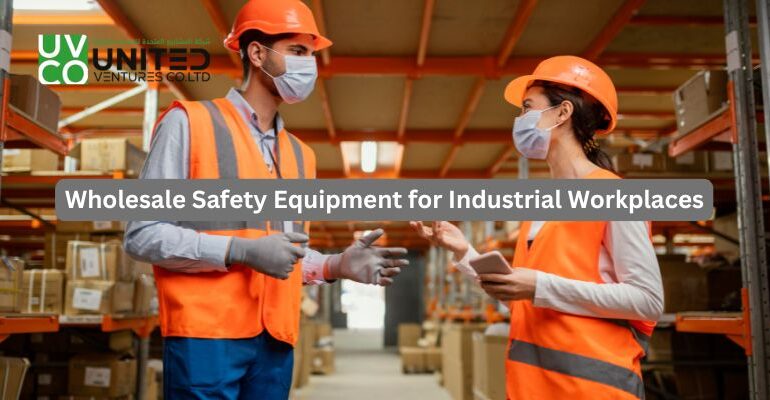
High-risk industrial workplaces need safety equipment that matches real hazards, fits workers properly, and remains dependable under demanding conditions. Buying Wholesale Safety Equipment can help companies maintain consistent PPE supplies across large teams, but the smartest purchasing strategy starts with hazard assessment not simply buying products in bulk.
From construction and oil and gas to manufacturing, utilities, and heavy industrial operations, protective equipment is one part of a broader safety system. The objective is straightforward: provide workers with appropriate protection without creating equipment shortages, poor fit, or unnecessary purchasing costs.
What Is Wholesale Safety Equipment?
Wholesale safety equipment refers to workplace protective products purchased in larger quantities for organizations, contractors, distributors, or industrial operations. Depending on the workplace hazards, this can include head, eye, face, hearing, hand, foot, respiratory, body, and fall protection equipment.
The important distinction is that wholesale purchasing is a procurement strategy, not a safety strategy by itself. Buying 1,000 pairs of gloves does not make a workplace safer if those gloves are unsuitable for the chemicals, temperatures, cutting hazards, or mechanical tasks workers actually face.
Why Does Bulk PPE Procurement Matter?
Industrial projects often involve large workforces and continuous PPE consumption. Equipment may be replaced because it becomes damaged, contaminated, worn, expired, or otherwise unsuitable for continued use.
A reliable wholesale supply can make PPE availability more predictable. It also helps procurement teams standardize equipment across departments when the same protection is appropriate for multiple work areas.
Key Benefits of Wholesale Purchasing
- Consistent supply: Reduces the likelihood of workers being left without required PPE.
- Standardization: Makes training and replacement procedures easier to manage.
- Procurement efficiency: Consolidates larger orders instead of relying on repeated small purchases.
- Inventory planning: Helps safety teams establish minimum and maximum stock levels.
- Project readiness: Supports faster preparation for new industrial sites and workforce expansion.
How Should Companies Choose PPE for High-Risk Work?
Choosing PPE should begin with the hazard, not the product catalog. OSHA’s general industry PPE requirements call for workplace hazard assessment and selection of PPE that protects workers from identified hazards while fitting properly.
A Practical Five-Step Selection Process
- Identify the hazard: Determine whether workers face chemical, mechanical, electrical, thermal, noise, respiratory, impact, or fall hazards.
- Define the exposure: Consider how often workers encounter the hazard and under what operating conditions.
- Select appropriate protection: Choose equipment designed for the specific hazard rather than relying on generic PPE.
- Check fit and compatibility: Make sure multiple PPE items can be worn together without interfering with one another.
- Plan replacement and training: Establish inspection, maintenance, replacement, storage, and worker-training procedures.
This process is particularly important in high-risk environments because PPE is often the final layer of protection after other controls have been considered.
Which Safety Equipment Is Commonly Needed?
There is no universal PPE package for every industrial workplace. A refinery, fabrication workshop, construction site, and electrical facility can have completely different protection requirements.
Common categories may include:
- Head protection: Industrial safety helmets and related protective headgear.
- Eye and face protection: Safety eyewear, goggles, and face shields selected according to exposure.
- Hand protection: Gloves designed for specific mechanical, chemical, thermal, or other hazards.
- Foot protection: Protective footwear appropriate for impact, penetration, electrical, or environmental hazards.
- Hearing protection: Earplugs or earmuffs for environments with excessive noise exposure.
- Respiratory protection: Appropriate respirators where airborne hazards require them and where a compliant respiratory protection program is in place.
- Protective clothing: Specialized garments for identified workplace exposures.
- Fall protection: Appropriate systems for workers exposed to applicable fall hazards.
Why Fit and Compatibility Matter More Than Quantity?
One of the most overlooked issues in bulk PPE procurement is fit. A large order can look efficient on paper while creating practical problems if equipment does not suit the workers who will use it.
For example, protective eyewear should work with other required equipment without creating gaps or discomfort. Gloves need to provide the required protection while still allowing workers to perform their tasks. Respiratory protection involves additional fit and program requirements.
OSHA specifically requires appropriate PPE selection and proper fit in its general industry requirements.
The lesson is simple: buying more PPE is not the same as buying better PPE.
What Should Buyers Consider When Ordering Wholesale?
Price matters, but it should not be the first or only comparison point. Industrial procurement teams should look at the complete cost and reliability of the safety program.
Wholesale PPE Buyer Checklist
- Does the equipment match the documented workplace hazards?
- Are applicable standards and certifications clearly documented?
- Is sizing available for the actual workforce?
- Can different PPE items be used together comfortably?
- Are product specifications and limitations clearly available?
- Can the supplier maintain consistent stock for repeat orders?
- Are replacement and replenishment requirements understood?
- Does the supplier provide reliable product documentation?
For businesses sourcing Wholesale Safety Equipment in Saudi Arabia, consistency becomes particularly important when equipment is required across multiple industrial projects, facilities, or contractor teams.
How Can Companies Manage PPE Inventory Better?
Good inventory management prevents two expensive problems: running out of critical equipment and overstocking products that are rarely used.
A practical approach is to divide PPE inventory into three groups: everyday-use items, task-specific equipment, and emergency or specialized equipment.
Everyday items such as commonly used gloves or safety eyewear may require frequent replenishment. Specialized products should be controlled more carefully so that the right equipment is available when a particular task begins.
A Simple Inventory Framework
- Track usage: Record which PPE categories are consumed most frequently.
- Set reorder levels: Establish minimum stock levels based on workforce size and consumption.
- Inspect stored equipment: Check packaging, condition, storage requirements, and product dates where applicable.
- Review after projects: Compare planned quantities with actual usage.
- Adjust future orders: Use real consumption data rather than guessing.
Why Training Still Matters After PPE Is Purchased?
Even excellent equipment can fail as a safety measure when workers do not know when or how to use it. PPE training should cover when protection is necessary, what type is required, how to put it on and adjust it, its limitations, and how it should be cared for.
OSHA’s PPE requirements specifically address worker training and the proper use, care, maintenance, useful life, and disposal of protective equipment.
For procurement managers, this means purchasing and training should be treated as connected activities. The safest product is of limited value if workers cannot use it correctly.
Common Wholesale PPE Purchasing Mistakes
- Choosing by price alone: The cheapest product may not provide the required protection or durability.
- Ignoring worker fit: Poorly fitting PPE can discourage consistent use.
- Buying excessive quantities: Overstocking ties up budget and storage space.
- Skipping product documentation: Buyers should understand specifications, limitations, and applicable requirements.
- Treating PPE as the only control: PPE should support, not replace, appropriate engineering and administrative controls where those are feasible.
Frequently Asked Questions
1. What is wholesale safety equipment?
Wholesale safety equipment consists of workplace protective products purchased in larger quantities for industrial companies, contractors, distributors, and other organizations. The equipment should be selected according to identified workplace hazards.
2. What PPE is commonly used in industrial workplaces?
Common categories include head, eye, face, hearing, hand, foot, respiratory, body, and fall protection. The correct combination depends on the hazards present at the specific workplace.
3. How should companies choose industrial PPE?
Companies should first assess workplace hazards, then select appropriate equipment, verify fit and compatibility, review applicable requirements, and establish training and maintenance procedures.
4. Is buying PPE in bulk always more cost-effective?
Not necessarily. Bulk purchasing can improve procurement efficiency, but excessive inventory or unsuitable equipment can increase costs. Orders should reflect actual workforce size, usage patterns, storage capacity, and project requirements.
5. Why is PPE training important?
Training helps workers understand when PPE is necessary, how to wear and adjust it, its limitations, and how to maintain and replace it correctly. Proper training is an essential part of an effective PPE program.
Final Thoughts
Wholesale safety equipment is most valuable when purchasing decisions are driven by real workplace hazards rather than quantity or price alone. The strongest industrial PPE programs combine appropriate equipment, correct fit, dependable supply, worker training, and disciplined inventory management. In high-risk environments, that combination turns PPE from a procurement item into a meaningful part of workplace protection.
Full Audio Version:- Click Here
