
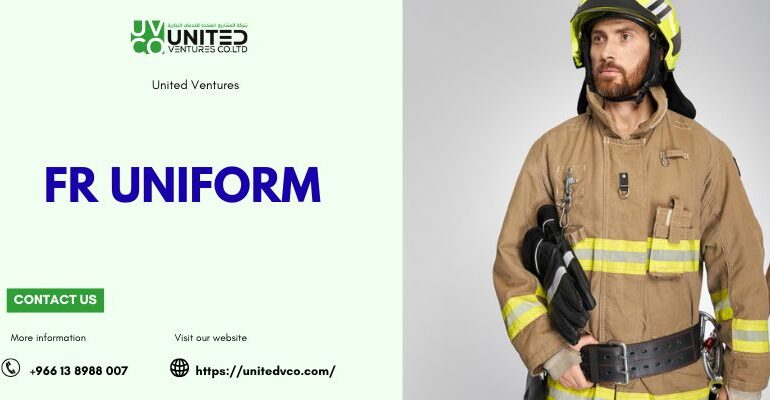
FR uniforms are important in the oil and gas industry because they can provide workers with a critical layer of protection when exposed to flash fires, brief flame contact, and certain thermal hazards. Unlike ordinary workwear, properly selected flame-resistant clothing is designed to resist ignition and limit continued burning, giving workers valuable protection during an incident.
A properly specified FR Uniform is therefore more than standard work clothing. It forms part of a broader personal protective equipment strategy designed around the hazards, work activities, and conditions found at refineries, drilling sites, processing facilities, pipelines, and other oil and gas operations.
What Is an FR Uniform?
An FR uniform is protective workwear made from flame-resistant materials that are designed to resist ignition and reduce the continuation of burning when exposed to specified thermal hazards.
One important point is often misunderstood: FR clothing is not completely “fireproof.” Its purpose is to provide additional protection during a hazardous event, not to make a worker immune to fire or heat.
The actual protection depends on the garment, fabric, construction, fit, maintenance, and the hazard it is intended to address. Employers should select clothing according to a proper workplace hazard assessment rather than choosing garments simply because they carry an FR label.
Why Is FR Clothing Essential in Oil and Gas?
Oil and gas workplaces can contain flammable gases, vapours, liquids, and combustible materials. Routine operations such as maintenance, drilling, welding, equipment servicing, and process work can expose personnel to situations where a sudden ignition event is possible.
FR workwear cannot prevent an explosion or eliminate the underlying hazard. What it can do is reduce the contribution of the clothing itself to an injury during certain thermal events.
1. It Helps Reduce Clothing-Related Burn Risk
Ordinary fabrics may ignite, melt, or continue burning after exposure to a flame. Depending on the material, this can make an already dangerous incident worse.
Appropriately designed FR garments are intended to resist ignition and self-extinguish within their tested performance characteristics. That distinction can be extremely important during a short-duration flash fire.
2. It Supports a Layered Safety Strategy
Industrial safety rarely depends on one piece of PPE. Engineering controls, safe operating procedures, training, emergency planning, and personal protective equipment all work together.
FR clothing should therefore be viewed as one layer within the hierarchy of controls—not as a substitute for controlling the hazard at its source.
Which Oil and Gas Workers May Need FR Uniforms?
The requirement depends on the job, workplace assessment, applicable regulations, and potential exposure. FR clothing may be relevant for personnel working around processes or tasks where flash-fire or related thermal hazards are reasonably foreseeable.
- Drilling and well-service personnel
- Refinery and petrochemical workers
- Maintenance and mechanical teams
- Pipeline and terminal workers
- Welding and hot-work personnel
- Electrical and instrumentation workers where applicable
- Contractors working inside hazardous industrial facilities
The key question is not simply, “Does this worker work in oil and gas?” It is, “What hazards can this worker reasonably encounter while performing the job?”
How to Choose the Right FR Uniform?
Selecting FR clothing should begin with the hazard assessment and then move toward garment specifications. Buying the heaviest or most expensive garment is not automatically the safest decision.
Step 1: Identify the thermal hazards
Determine whether workers could encounter flash fire, arc flash, molten substances, radiant heat, or another thermal hazard. Different hazards require different protective approaches.
Step 2: Review applicable requirements
Check the standards, regulations, and employer requirements that apply to the particular workplace and task. The garment should have appropriate certification or test information for its intended use.
Step 3: Consider the complete uniform
A protective shirt combined with unsuitable trousers, exposed skin, or non-FR outerwear may create gaps in protection. Clothing should be considered as a complete system.
Step 4: Check fit and mobility
Workers need to bend, climb, walk, operate tools, and respond quickly during emergencies. A garment that restricts movement or encourages workers to remove it is not a practical safety solution.
Step 5: Establish a care and replacement routine
Correct laundering and inspection matter. Contamination, excessive wear, damaged closures, or unauthorized alterations can affect garment performance. Follow the manufacturer’s care instructions and replace damaged garments when necessary.
What Features Should Good FR Workwear Have?
Good FR workwear balances protection with the realities of industrial work. Workers may wear it for long shifts, in hot environments, while performing physically demanding tasks.
- Appropriate flame-resistant fabric: Selected for the identified workplace hazard.
- Durable construction: Reinforced areas and dependable closures can support demanding work conditions.
- Comfort and breathability: Important for maintaining worker acceptance during long shifts.
- Practical fit: Enough freedom of movement without creating unnecessary loose material.
- Compatible PPE: The uniform should work appropriately with helmets, gloves, safety footwear, eye protection, and other required equipment.
FR Uniforms and the Wider Industrial Safety System
Oil and gas companies often need more than protective clothing to keep operations safe. Reliable Industrial Equipment Solutions, appropriate tools, equipment inspections, workplace controls, and trained personnel all contribute to risk reduction.
For example, an FR coverall cannot compensate for a leaking process line, poor ventilation, inadequate isolation procedures, or unsafe hot-work practices. The strongest safety programs address those risks first and use PPE as an additional protective barrier.
Common Mistakes When Using FR Workwear
Even a high-quality garment can provide less protection if it is selected or used incorrectly. Several mistakes are particularly worth avoiding.
- Choosing clothing solely because it is labelled “FR” without checking its intended protection.
- Mixing FR and non-FR garments in ways that compromise the protective system.
- Ignoring manufacturer laundering and maintenance instructions.
- Allowing damaged garments to remain in service.
- Assuming FR clothing replaces hazard controls or safe work procedures.
Another practical issue is garment modification. Cutting, patching, embroidery, or replacing components without considering the manufacturer’s requirements can affect the garment’s tested construction and should be handled carefully.
Frequently Asked Questions(FAQs):
1. Why do oil and gas workers wear FR uniforms?
FR uniforms help protect workers from certain thermal hazards by resisting ignition and limiting continued burning when the garment is exposed to specified flame conditions.
2. Are FR uniforms fireproof?
No. FR clothing is not fireproof. It is designed to provide a defined level of protection against particular hazards and must be used with other workplace safety controls.
3. Can FR clothing prevent burns?
It can reduce clothing-related burn risk during certain thermal incidents, but it cannot guarantee that a worker will avoid burns. Protection depends on the hazard, exposure, garment, and complete PPE system.
4. How often should FR uniforms be replaced?
There is no single replacement interval for every garment. Inspect clothing regularly and follow manufacturer guidance. Replace garments when they are damaged, excessively worn, contaminated, or otherwise no longer suitable for service.
5. What should companies consider before buying FR workwear?
Companies should consider the workplace hazard assessment, applicable standards, garment performance, fabric, fit, comfort, compatibility with other PPE, maintenance requirements, and worker acceptance.
Final Thoughts
FR uniforms matter because oil and gas work can involve hazards where a few seconds of additional protection may make a meaningful difference. The right garment is not simply the thickest or most expensive option; it is one selected for the actual hazard, worn correctly, maintained properly, and integrated into a complete safety program. In industrial environments, thoughtful PPE selection is part of responsible risk management not an afterthought.
Full Audio Version:- Click Here