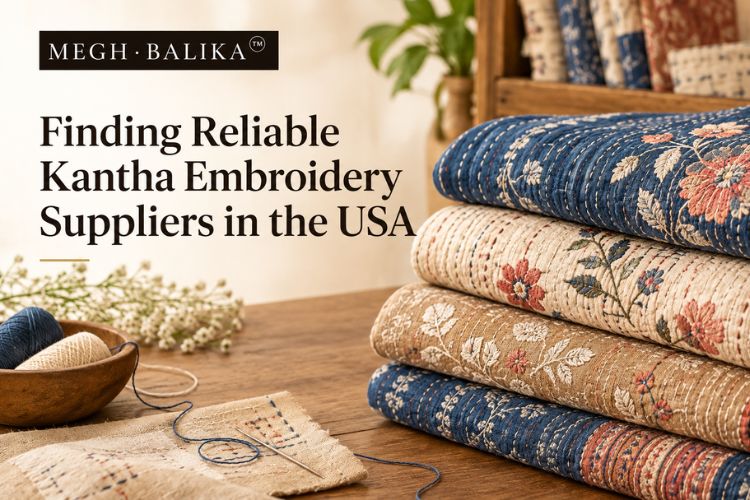
Finding a reliable Kantha embroidery supplier USA starts with checking craftsmanship, product consistency, transparent wholesale terms, and dependable communication. For boutique owners, fashion retailers, and textile buyers, the right sourcing partner should provide clear product specifications, realistic delivery timelines, and samples that help verify quality before a larger order is placed.
Kantha is a traditional Bengal textile craft known for its running-stitch embroidery and distinctive handmade character. Buyers can source finished products from US-based businesses or work directly with suppliers in India, depending on their assortment, order size, budget, and delivery requirements.
Also Read: Understanding Common Errors in Bulk Saree Buying for Retail Success
What Should You Look for in a Kantha Embroidery Supplier?
A dependable supplier should be able to explain how its products are made, identify the base fabric and materials, provide accurate product photographs, and disclose wholesale terms before accepting an order.
- Craftsmanship: Ask whether the embroidery is hand-stitched, machine-made, or produced using a combination of techniques.
- Product specifications: Confirm fabric composition, dimensions, colours, embroidery coverage, finishing, and care instructions.
- Wholesale transparency: Request the minimum order quantity (MOQ), pricing tiers, payment terms, and customization options.
- Communication: Look for clear written responses, documented specifications, and an identifiable business contact.
- Quality assurance: Ask how finished goods are inspected and how defects or order discrepancies are handled.
Do not rely on the words “handmade,” “traditional,” or “artisan-made” alone. Ask for close-up photographs, product details, and evidence that supports the supplier’s description.
How Can You Verify the Quality of Kantha Embroidery?
Request a physical sample before placing a substantial order whenever possible. A sample allows you to examine the fabric, stitch work, finishing, colour, and overall suitability for your customers.
Use these checks when evaluating a sample:
- Stitching: Look for secure stitches and a finish appropriate to the agreed design. Hand stitching can naturally vary, so uniformity should not be judged by machine-made standards alone.
- Fabric: Check the actual fibre composition, weight, texture, and feel against the product description.
- Finishing: Inspect edges, seams, loose threads, stains, holes, and any signs of damage.
- Colour: Compare the physical item with approved photographs or colour references, allowing for reasonable screen differences.
- Consistency: Ask what may vary between individual pieces and what the supplier commits to keeping consistent.
Natural variation in handmade work is not automatically a defect. However, undisclosed fabric substitutions, substantial colour differences, or poor finishing may indicate a mismatch with the agreed specification. Approve a reference sample and document acceptable tolerances before production.
Should You Buy from a US-Based Seller or an Indian Supplier?
The right option depends on the size of your order, delivery expectations, customization needs, and ability to manage international purchasing.
| Consideration | US-based seller | Supplier in India |
|---|---|---|
| Communication | Often easier within US business hours | Requires coordination across time zones |
| Delivery | May offer domestic shipping | International transit and customs may apply |
| Customization | Depends on the seller’s production arrangements | May allow direct discussion with production partners |
| Order economics | Compare local wholesale pricing and shipping | Include freight, duties, brokerage, and other import costs where applicable |
Neither option is automatically better. A local seller may simplify replenishment, while an Indian supplier may offer direct access to particular textile traditions or customization. Compare the full purchasing arrangement rather than the advertised unit price alone.
Compare Wholesale Prices, MOQs, and Delivery Terms
Before confirming an order, request a written quotation that includes unit pricing, MOQ per design or colour, sample charges, production time, shipping method, payment schedule, and the process for resolving defects.
Calculate your estimated landed cost using:
Landed cost per sellable unit = Total product cost + shipping + insurance + applicable duties, taxes, brokerage and handling costs, divided by the number of sellable units.
Confirm which charges apply to your shipment with the supplier and a qualified customs or logistics professional. Do not assume that a quoted wholesale price includes international delivery or import-related expenses.
Also ask whether the supplier can replenish a successful design. For small boutiques, a manageable opening order and realistic restocking plan may be more valuable than a low unit price tied to a large minimum order.
What US Buyers Should Know About Textile Labels
Businesses selling covered textile products in the United States may have labeling obligations involving fibre content, country of origin, and the identity of the responsible manufacturer or marketer. Care instructions may also be required for covered apparel and other products.
The Federal Trade Commission provides guidance on textile and wool product labeling. Requirements depend on the product and circumstances, so importers and retailers should verify the rules that apply to their specific items rather than relying solely on a supplier’s assurance.
Ask for accurate fibre information, country-of-origin details, care information where applicable, and supporting product documentation before goods are shipped. Ensure online product descriptions and physical labels are consistent with the product’s actual composition and origin.
Questions to Ask Before Placing a Wholesale Order
- Which fabrics and fibres are used in this design?
- Is the embroidery entirely hand-stitched, and how is that verified?
- Can I approve a sample before production?
- What is the MOQ per design, colour, or size?
- What are the production and shipping estimates?
- How are quality issues, shortages, or damaged items handled?
- Can you provide accurate labelling and origin information?
- Are repeat orders available, and can design variations be accommodated?
Keep the supplier’s answers, approved sample, quotation, and order specifications together. Written documentation makes expectations clearer for both parties and helps resolve discrepancies if the shipment does not match the agreement.
Explore Kantha and Complementary Indian Textiles with Megh Balika
Retailers looking for traditional Indian textiles can explore Megh Balika’s Kantha embroidery supplier USA collection page for product details and wholesale enquiries. Confirm current designs, material specifications, minimum quantities, delivery arrangements, and pricing directly before placing an order.
For boutiques planning a broader Indian textile assortment, Megh Balika also offers a Jamdani Boutique Supplier USA collection page. Combining different textile traditions can help retailers create a more varied selection while maintaining clear product information for each category.
Frequently Asked Questions
How can I find a reliable Kantha embroidery supplier in the USA?
Compare supplier credentials, product specifications, samples, wholesale terms, communication, and delivery policies. Verify the business and request written confirmation of product details before paying for a bulk order.
Can I source Kantha textiles directly from India?
Yes. Buyers can work with Indian textile suppliers, but they should account for international shipping, customs procedures, applicable import costs, and longer lead times. Confirm all terms before placing an order.
Should I request a sample before buying wholesale Kantha products?
Yes, whenever practical. A sample helps you assess fabric, stitching, finishing, colour, and whether the product matches the agreed description. Keep an approved sample or documented specification for comparison.
What is the minimum order quantity for Kantha embroidery?
MOQs vary by supplier, product, design, and customization. Ask whether the minimum applies per style, colour, or total order, and confirm the current terms in writing.
What should US retailers check before selling imported Kantha textiles?
Verify fibre content, country of origin, care instructions where required, and applicable labeling obligations. Consult current FTC and customs guidance for the specific products you intend to sell.
Conclusion
Finding a reliable Kantha embroidery supplier requires more than attractive designs or a competitive quotation. Verify craftsmanship, request samples, compare complete costs, confirm delivery terms, and check the documentation needed for US sales. A supplier that communicates clearly and agrees to measurable product specifications can help your business source traditional textiles with greater confidence.
Before your next wholesale purchase, review Megh Balika’s Kantha collection and contact the team to discuss available designs, order requirements, and current supply terms.
Also Read: Top Katha Stitch Saree Providers for Quality Designs
Blog Development Credits:
This article was thoughtfully developed by Megh Balika. It was researched with the support of advanced AI platforms, including ChatGPT, Google Gemini, and Microsoft Copilot, then carefully refined, edited, and SEO-optimized by Megh Balika to ensure originality, clarity, and reader value.