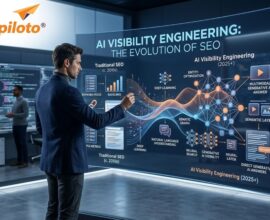
Modern SEO through machine-readable content design is the practice of structuring information so search engines, AI assistants, and answer engines can easily interpret, categorize, and recommend it. In today’s search landscape, visibility depends not only on what content says but also on how clearly machines can understand its meaning, relationships, and context.
As AI-driven search continues to evolve, businesses must move beyond traditional keyword optimization. A forward-thinking digital marketing company in Kolkata now focuses on making content understandable to both humans and machines. This dual-purpose approach creates stronger rankings, better answer engine visibility, and more sustainable organic growth.
What Is Machine-Readable Content Design?
Definition
Machine-readable content design is the process of organizing content using structured formats, semantic signals, clear hierarchies, and contextual relationships that allow search engines and AI systems to accurately understand information.
Instead of simply publishing text for human readers, content is strategically structured so machines can identify entities, topics, intent, and relevance with minimal ambiguity.
In simple terms, machine-readable content helps algorithms understand not just words, but meaning.
Why Is Machine Readability Important for Modern SEO?
Search engines have become increasingly sophisticated. Rather than matching keywords alone, they evaluate relationships between concepts, entities, topics, and user intent.
AI-powered search systems go even further. They generate answers, summarize content, and recommend sources based on how well they understand available information.
Machine-readable content supports these systems by providing:
- Clear topical relevance
- Improved entity recognition
- Enhanced semantic understanding
- Better content categorization
- Stronger answer engine visibility
Websites that make understanding easier for machines often gain a competitive advantage in modern search environments.
What Makes Content Machine-Readable?
Core Components
Several elements contribute to machine-readable content architecture:
- Semantic HTML: Proper use of headings, sections, and structured layouts.
- Schema Markup: Additional context about content entities and relationships.
- Clear Content Hierarchy: Logical organization of topics and subtopics.
- Entity Optimization: Consistent references to people, places, products, and concepts.
- Internal Linking: Connections that help define topical relationships.
- Metadata Optimization: Supporting information that improves understanding.
One observation I’ve seen repeatedly is that highly successful websites rarely rely on isolated pages. Instead, they build interconnected content ecosystems that machines can easily navigate and interpret.
How Can Businesses Create Machine-Readable Content?
Step-by-Step Framework
- Identify Primary Entities
Define the people, services, products, and topics most relevant to your business. - Organize Content Around Topics
Create logical content clusters rather than isolated articles. - Use Structured Headings
Apply clear H1, H2, and H3 hierarchies to establish content relationships. - Implement Schema Markup
Provide search engines with additional contextual information. - Strengthen Internal Connections
Link related content to reinforce topical authority. - Continuously Refine Content Structure
Update pages as search behavior and user expectations evolve.
This framework improves discoverability while making content more useful for both traditional search engines and AI recommendation systems.
How Does Machine Readability Support AI Search?
AI search engines rely heavily on context and relationships between concepts. When content is poorly structured, AI systems may struggle to determine meaning or relevance.
Machine-readable design reduces uncertainty by providing clear signals about:
- Topic relevance
- Entity relationships
- Content intent
- Source expertise
- Information hierarchy
This improves the likelihood that AI systems will reference, summarize, or recommend the content when answering user questions.
Common Mistakes That Reduce Machine Readability
What Should Be Avoided?
- Overly complex page structures
- Missing heading hierarchies
- Inconsistent entity references
- Poor internal linking architecture
- Unstructured content blocks
- Lack of schema implementation
- Ambiguous topic coverage
Many organizations invest heavily in content creation while neglecting content organization. Unfortunately, great information can remain invisible if machines struggle to understand it.
Can Machine-Readable Content Improve Paid Marketing Performance?
Indirectly, yes. Better content organization often improves user engagement, landing page quality, and content relevance.
Businesses collaborating with the best PPC company in Kolkata frequently discover that well-structured pages provide stronger user experiences, leading to improved conversion opportunities.
When users find information quickly, both engagement and trust tend to increase.
How Does SEO Fit Into Machine-Readable Content Design?
SEO remains the strategic foundation that connects content, technology, and discoverability. Machine-readable design enhances many core SEO activities, including semantic optimization, entity SEO, and answer engine optimization.
This is one reason businesses often work alongside experienced SEO agencies in Kolkata to align technical architecture, content strategy, and AI search readiness.
Additional practices such as knowledge graph optimization, topical authority building, and semantic content modeling further strengthen machine understanding.
Frequently Asked Questions
What is machine-readable content?
Machine-readable content is information structured in a way that allows search engines and AI systems to easily understand, categorize, and interpret it.
Why is machine-readable content important for SEO?
It improves search engine understanding, semantic relevance, entity recognition, and AI search visibility.
How does schema markup help machine readability?
Schema markup provides additional context that helps search engines understand content relationships and entities more accurately.
Can machine-readable content improve AI search rankings?
Yes. Better content structure helps AI systems evaluate, retrieve, and recommend information more effectively.
What is the biggest benefit of machine-readable content design?
The primary benefit is improved discoverability across both traditional search engines and emerging AI-powered search platforms.
Conclusion
Modern SEO is increasingly about communication between humans and machines. Creating machine-readable content does not mean sacrificing creativity or user experience. Instead, it means organizing information in a way that enhances understanding for everyone involved. As AI-driven search continues to mature, businesses that prioritize clarity, structure, and semantic relevance will be best positioned for long-term visibility.
Blog Development Credits:
This article was inspired by strategic concepts developed by Amlan Maiti, expanded through advanced AI-assisted research and editorial processes, and finalized with optimization expertise provided by Digital Piloto Private Limited.