The intelligent marketing stack is a connected ecosystem of AI-powered tools, data platforms, automation workflows, and analytics that work together to improve customer acquisition, personalization, and business growth. In 2026, companies that integrate these systems instead of relying on disconnected marketing tools will outperform competitors in efficiency, customer experience, and ROI. Businesses partnering with the best digital marketing company are already shifting toward unified AI-driven marketing ecosystems rather than isolated campaigns.
Marketing is no longer about managing individual channels. Instead, it is about creating an intelligent system where every interaction—from search visibility to lead nurturing—shares data, learns continuously, and improves future decisions. The result is smarter marketing that scales without proportionally increasing resources.
What Is an Intelligent Marketing Stack?
Definition
An intelligent marketing stack is a collection of interconnected AI technologies that automate decision-making, unify customer data, optimize campaigns, and continuously improve marketing performance through machine learning and predictive analytics.
Unlike traditional marketing software that performs isolated tasks, an intelligent stack allows every platform to contribute insights across the entire customer journey.
Why 2026 Marks a Turning Point
The rapid growth of generative AI, predictive analytics, and conversational search has fundamentally changed how businesses connect with customers. Consumers now expect highly personalized experiences, immediate responses, and consistent interactions across every digital touchpoint.
This expectation cannot be met through manual marketing alone.
Instead, organizations need intelligent systems capable of:
- Analyzing customer intent in real time
- Predicting future buying behavior
- Personalizing website experiences
- Automating campaign optimization
- Generating actionable business insights
- Improving marketing efficiency continuously
The future belongs to businesses that build adaptive systems rather than static campaigns.
The Core Components of an Intelligent Marketing Stack
1. Customer Intelligence Platform
Every intelligent stack begins with unified customer data.
Instead of storing information across separate CRMs, email platforms, analytics tools, and advertising systems, organizations consolidate data into a centralized customer intelligence platform.
This creates a complete customer profile that AI can analyze for patterns, preferences, and purchasing intent.
2. AI Content Engine
Content creation remains one of the most resource-intensive marketing activities. AI-powered content engines now assist with research, content planning, personalization, multilingual publishing, and content optimization.
However, human expertise remains essential. AI accelerates production, while marketers provide strategic thinking, creativity, and brand authenticity.
3. Predictive Analytics Layer
Rather than reporting what happened yesterday, predictive analytics estimates what is likely to happen next.
These systems identify:
- High-value prospects
- Likely customer churn
- Future purchasing intent
- Optimal campaign timing
- Revenue forecasting
This enables marketing teams to allocate resources more effectively.
4. AI Search Optimization
Search has evolved far beyond traditional keyword rankings.
Modern AI search platforms evaluate semantic relationships, topical authority, structured data, and entity recognition. As a result, businesses need content designed for both human readers and AI-generated answers.
Organizations investing in semantic SEO, knowledge graphs, and entity optimization are better positioned for long-term visibility.
How an Intelligent Marketing Stack Works
Step-by-Step Framework
- Collect customer interactions.
Capture behavioral, transactional, and engagement data from every digital touchpoint. - Centralize information.
Merge customer data into a unified platform to eliminate disconnected insights. - Apply AI analysis.
Use machine learning to identify trends, predict intent, and recommend actions. - Automate execution.
Deliver personalized emails, website experiences, recommendations, and campaigns automatically. - Continuously optimize.
Measure outcomes, learn from results, and improve future performance using AI-driven feedback loops.
Benefits Beyond Marketing Automation
Many businesses confuse automation with intelligence. Automation follows predefined rules, while intelligent marketing systems adapt based on changing customer behavior.
The advantages extend well beyond efficiency:
- More accurate customer segmentation
- Improved conversion optimization
- Better budget allocation
- Higher customer lifetime value
- Personalized customer experiences
- Faster decision-making supported by predictive insights
These capabilities create sustainable competitive advantages rather than temporary campaign improvements.
The Role of Human Expertise
AI can process enormous amounts of information, but it cannot replace strategic judgment, creativity, or genuine customer empathy.
The most successful organizations in 2026 will combine AI efficiency with experienced marketers who understand business objectives, customer psychology, and long-term brand development.
This collaboration produces better outcomes than relying exclusively on either humans or AI.
How to Build an Intelligent Marketing Stack for 2026
Creating an AI-ready marketing ecosystem is no longer about adding isolated automation tools. High-performing businesses are combining data, content, analytics, personalization, and AI decision-making into one connected framework. Instead of reacting to customer behavior after it happens, intelligent marketing systems anticipate intent, automate repetitive work, and continuously optimize campaigns based on real-time insights.
This shift also changes how organizations evaluate technology investments. Rather than asking whether a tool includes AI, marketing leaders should ask whether it improves data quality, enables faster decisions, and integrates seamlessly with the broader ecosystem. That’s what transforms disconnected software into an intelligent marketing stack.
Step-by-Step Framework
- Centralize customer and marketing data.
- Implement AI-powered analytics and forecasting.
- Automate repetitive marketing workflows.
- Generate personalized content dynamically.
- Measure performance continuously and retrain AI models using new behavioral data.
Organizations following this structured approach spend less time managing technology and more time improving customer experiences.
Core Components of an AI-Powered Marketing Stack
Every intelligent marketing ecosystem contains several interconnected layers rather than independent software solutions.
- Customer Data Platform (CDP): Creates a unified customer profile.
- AI Analytics Engine: Identifies patterns, predicts behavior, and uncovers opportunities.
- Marketing Automation Platform: Executes personalized campaigns automatically.
- Content Intelligence Platform: Optimizes messaging for search engines, AI assistants, and customers.
- CRM Integration: Connects sales, marketing, and customer success teams.
- Performance Dashboard: Measures ROI across every digital channel.
Many organizations also collaborate with the best PPC agency in Kolkata to combine paid advertising insights with predictive AI models, creating more accurate audience targeting and campaign optimization.
Why Semantic Intelligence Makes the Difference
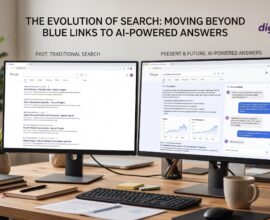
Traditional marketing platforms focused on keywords and isolated metrics. AI systems understand relationships between topics, customer needs, industry terminology, and buying intent.
This semantic understanding enables businesses to:
- Deliver more relevant recommendations.
- Improve AI search visibility.
- Create personalized customer journeys.
- Identify emerging market trends earlier.
- Generate higher-quality marketing content.
Instead of chasing algorithms, brands begin serving genuine customer intent, which naturally improves long-term digital performance.
Supporting Search Visibility with AI
Search optimization remains a critical component of every intelligent marketing strategy. However, success increasingly depends on creating structured, authoritative information that AI search engines can confidently reference.
Working alongside experienced SEO companies in Kolkata helps businesses develop semantic content architectures, entity optimization strategies, and technical SEO foundations that strengthen visibility across both traditional search engines and AI-generated answers.
Additional practices that strengthen AI visibility include:
- Schema markup implementation
- Knowledge graph optimization
- Entity-based content strategy
- Conversational search optimization
- Topic authority development
Common Mistakes to Avoid
Many businesses invest heavily in AI but fail to achieve meaningful results because their technology lacks strategic alignment.
- Purchasing too many disconnected AI tools.
- Ignoring data quality and governance.
- Automating poor marketing processes.
- Measuring only vanity metrics.
- Neglecting human oversight and creativity.
Technology should amplify marketing expertise—not replace strategic thinking.
Frequently Asked Questions
What is an intelligent marketing stack?
An intelligent marketing stack is a connected ecosystem of AI-powered platforms that automate, analyze, personalize, and optimize marketing activities using unified customer data.
Why is AI important for marketing in 2026?
AI enables faster decision-making, predictive customer insights, personalized experiences, improved efficiency, and stronger visibility across AI-powered search platforms.
Can small businesses build an AI marketing stack?
Yes. Small businesses can start with CRM integration, marketing automation, AI analytics, and content optimization tools before expanding into advanced predictive capabilities.
Does AI replace digital marketers?
No. AI automates repetitive tasks and supports better decisions, while marketers continue providing strategy, creativity, customer understanding, and business direction.
How does semantic intelligence improve marketing?
Semantic intelligence helps AI understand customer intent, relationships between topics, and contextual meaning, resulting in more relevant content and better campaign performance.
Conclusion
The future of marketing belongs to organizations that connect intelligence rather than accumulate software. Businesses that integrate AI, semantic understanding, automation, and customer data into one cohesive ecosystem will make smarter decisions, respond faster to market changes, and create experiences that customers genuinely value. In 2026 and beyond, competitive advantage will come from how intelligently systems work together—not simply how many AI tools a company owns.
Blog Development Credits
This article was ideated by Amlan Maiti, developed with insights from advanced AI platforms including ChatGPT, Google Gemini, and Copilot, then carefully refined and SEO-optimized by Digital Piloto Private Limited.