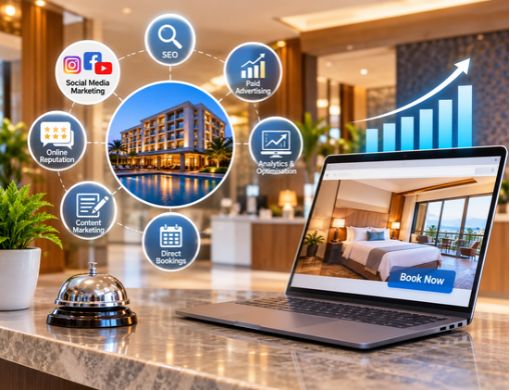
The hospitality industry in India is becoming increasingly competitive, and travellers now rely heavily on digital platforms to discover hotels, compare accommodation options, read reviews, and make reservations. For hotel owners, maintaining a strong online presence is no longer optional. Partnering with a professional Hotel Digital Marketing Company in India can help properties attract relevant audiences, improve brand visibility, and generate more direct booking opportunities through a coordinated digital strategy.
The Changing Digital Landscape of India’s Hotel Industry
India’s tourism market presents significant opportunities for hotels, resorts, and boutique accommodation providers. According to the Ministry of Tourism, India recorded approximately 2,948.19 million domestic tourist visits in 2024. However, reaching these travellers requires more than traditional advertising or depending entirely on online travel agencies (OTAs).
Travellers increasingly use search engines, maps, social media, travel websites, and online reviews when evaluating accommodation. Hotels that provide accurate information, appealing photographs, transparent pricing, and convenient booking experiences are better positioned to attract potential guests.
Why Do Hotels Need Professional Digital Marketing Services?
A professional hotel marketing strategy connects a property’s online visibility with measurable business objectives. Instead of relying on disconnected promotional activities, hotels can use multiple digital channels to attract, engage, and convert prospective guests.
1. Improve Search Engine Visibility
Search engine optimisation helps hotels appear when travellers search for accommodation in specific destinations. Location-based keywords, informative destination pages, technical SEO, and optimised Google Business Profiles can improve local discoverability. A hotel in Jaipur, for example, may target relevant searches related to accommodation near popular attractions or business districts.
2. Generate More Direct Booking Opportunities
OTAs provide valuable visibility, but commissions and platform dependency can affect hotel profitability. A well-designed website with clear room information, competitive offers, secure booking functionality, and straightforward enquiry options gives guests another way to reserve accommodation directly.
Google also provides free hotel booking links to eligible hotel booking partners, while Hotel Ads offer paid visibility opportunities. These options can complement a hotel’s website and distribution strategy.
3. Build Brand Awareness Through Social Media
Social media marketing allows hotels to showcase room interiors, dining experiences, amenities, events, local attractions, and guest activities. Instagram, Facebook, and other relevant platforms can help properties connect with travellers during the inspiration and research stages of their journey.
Consistent visual content, useful travel information, and timely responses to enquiries can strengthen brand familiarity and encourage potential guests to explore the property.
4. Strengthen Online Reputation
Online reviews influence how travellers evaluate accommodation options. Monitoring guest feedback, responding professionally to complaints, and encouraging genuine reviews can strengthen credibility. Reputation management also helps hotel operators identify recurring service issues and improve guest experiences.
5. Reach High-Intent Travellers Through Paid Advertising
Google Ads, hotel advertising campaigns, and carefully targeted social media promotions can help hotels reach people actively researching accommodation. Campaigns can be organised around destinations, travel dates, property types, and relevant guest interests.
However, paid advertising should be supported by accurate pricing, suitable landing pages, booking availability, and conversion tracking. Otherwise, advertising expenditure may generate website visits without producing reservations.
Essential Digital Marketing Strategies for Hotels
An effective hospitality marketing programme should combine several complementary activities:
- Hotel SEO: Improve organic search visibility through technical optimisation, location-based content, and relevant landing pages.
- Website development: Create mobile-friendly websites with clear room details, amenities, pricing information, and booking functionality.
- Social media optimisation: Maintain consistent brand communication and publish engaging property-related content.
- Performance marketing: Run measurable advertising campaigns to attract qualified booking enquiries.
- Content marketing: Publish destination guides, travel tips, local attraction information, and useful guest resources.
- Conversion rate optimisation: Identify and remove obstacles that prevent website visitors from completing reservations.
- Marketing automation: Use appropriate automated communication for enquiries, booking confirmations, and follow-ups.
Website performance also matters. Hotels investing in redesigns or booking-focused website improvements can explore a specialist Bangalore Web Design Company to understand how responsive design and user experience support online conversions.
How Can Hotels Measure Digital Marketing Performance?
Digital marketing success should be evaluated through business outcomes rather than website traffic or social media followers alone. Hotels should monitor organic search visibility, qualified website enquiries, booking conversion rates, direct booking revenue, advertising cost per acquisition, and return on advertising spend.
For example, if a campaign generates many visitors but very few completed reservations, the hotel should investigate landing-page quality, pricing competitiveness, booking functionality, and audience relevance. This approach helps identify where improvements are needed.
How to Choose the Right Hotel Digital Marketing Partner
Hotels should evaluate potential agencies based on their hospitality marketing knowledge, SEO capabilities, website development experience, advertising expertise, reporting processes, and understanding of booking conversion. Ask for a clear scope of work, realistic performance indicators, transparent pricing, and a defined reporting schedule.
A suitable partner should understand that a luxury resort, budget hotel, business property, and boutique homestay have different audiences and marketing requirements. Strategies should therefore reflect the property’s location, positioning, seasonality, room inventory, and commercial goals.
Frequently Asked Questions
Why is digital marketing important for hotels?
Digital marketing helps hotels reach travellers online, improve search visibility, showcase their facilities, manage their reputation, and generate booking opportunities through different digital channels.
How can hotels increase direct bookings?
Hotels can improve direct bookings through SEO, a user-friendly website, clear room pricing, convenient booking functionality, targeted advertising, and relevant promotional offers.
What services should a hotel digital marketing company provide?
Relevant services include hotel SEO, local SEO, website development, social media marketing, paid advertising, content marketing, reputation management, and conversion rate optimisation.
Can digital marketing help independent hotels compete with large hotel chains?
Yes. Independent hotels can use destination-focused SEO, local content, distinctive property photography, targeted advertising, and personalised guest communication to reach relevant audiences without needing the same marketing resources as large chains.
Also Read: How the #1 B2B Digital Marketing Agency in Bangalore Generates Quality Leads
Conclusion
Hotels need professional digital marketing because travellers increasingly discover, evaluate, and book accommodation through online channels. A coordinated approach involving SEO, social media, paid advertising, reputation management, and website optimisation can help hospitality businesses improve discoverability and create more direct booking opportunities.
Choosing the right Hotel Digital Marketing Company in India is ultimately about finding a strategic partner that understands both digital acquisition and hospitality business objectives. With the right planning, measurement, and continuous optimisation, hotels can build stronger online brands and compete more effectively in the evolving travel market.