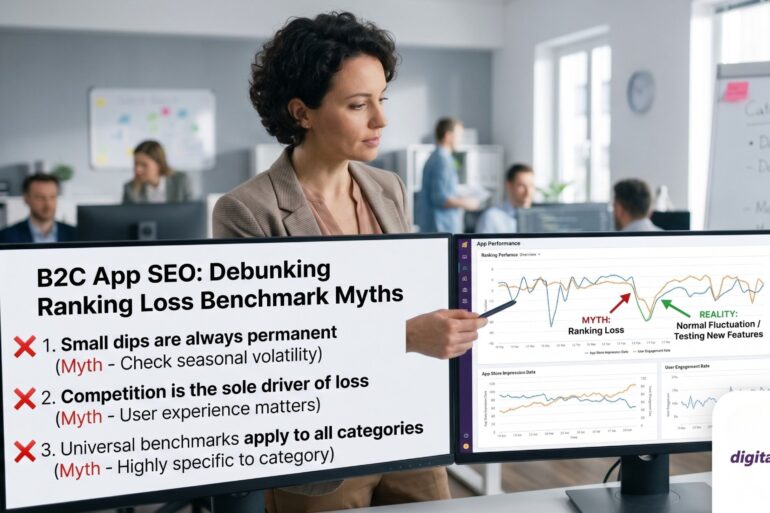
Ranking loss in B2C apps is rarely caused by a single issue—it’s usually a combination of shifting search behavior, content misalignment, and weak engagement signals. The real solution isn’t panic fixes but building clear benchmarks that track performance against search evolution. If you’re investing in SEO services Kolkata, they should help you measure and diagnose ranking drops systematically—not guess.
What is Ranking Loss? (Definition Format)
Ranking loss refers to a decline in your app’s visibility on search engines or app discovery platforms for targeted keywords or queries.
- Temporary loss: Caused by algorithm updates or testing phases
- Structural loss: Due to deeper issues like poor content or UX
- Perceived loss: Traffic drop without actual ranking change
Understanding the type of loss is critical before taking action.
The Biggest Myth: Ranking Loss Means SEO Failure
This is where most B2C teams go wrong.
Reality: Ranking fluctuations are part of search evolution. Algorithms continuously adjust based on user behavior, content quality, and intent shifts.
From what I’ve seen, reacting too quickly—changing content, URLs, or strategy—often makes things worse.
A better approach is to benchmark performance before making changes.
Why B2C Apps Are More Vulnerable
B2C apps operate in fast-moving markets—trends change, user intent shifts, and competition evolves rapidly.
This creates three challenges:
- High volatility: Rankings change frequently
- User-driven signals: Engagement impacts visibility
- Content saturation: Competing against similar apps
This is why a google ranking loss strategy must be benchmark-driven, not reactive.
Core Benchmarks to Track Ranking Loss
Instead of focusing only on rankings, track these key benchmarks:
- Keyword position stability: How consistent your rankings are over time
- Click-through rate (CTR): Are users choosing your result?
- Dwell time: How long users stay engaged
- Conversion rate: Are visits turning into actions?
- Search intent alignment: Does your content match user expectations?
These metrics tell you whether the problem is visibility or relevance.
Step-by-Step: Diagnosing Ranking Loss
Step 1: Identify the Scope
Ask:
- Is the drop site-wide or page-specific?
- Does it affect all keywords or just a few?
This helps narrow down the issue.
Step 2: Compare Before vs After Data
Look at performance 30–60 days before the drop:
- Traffic trends
- CTR changes
- Engagement metrics
This reveals whether the issue started earlier than expected.
Step 3: Analyze User Behavior
Ranking loss often follows engagement drops:
- Higher bounce rates
- Lower session duration
- Reduced conversions
This indicates content misalignment.
Step 4: Check Technical Factors
Collaborate with a website development agency in Kolkata to review:
- Page speed issues
- Indexing errors
- Mobile usability
Technical issues often amplify ranking drops.
Step 5: Evaluate Competitive Shifts
Sometimes, you didn’t drop—others improved.
Analyze competitors:
- New content strategies
- Improved UX
- Stronger engagement signals
What Healthy Ranking Fluctuation Looks Like (Bullet Format)
- Short-term dips: Recover within days or weeks
- Stable engagement: Users still interact with content
- Consistent conversions: Business impact remains steady
- Minor keyword shifts: Positions change slightly, not drastically
Not every drop is a crisis.
Real-World Insight: A B2C App Case
A lifestyle app I worked with saw a 30% traffic drop. The team assumed an algorithm penalty and planned a full content overhaul.
Instead, we analyzed benchmarks:
- Rankings were stable for key terms
- CTR had dropped significantly
- User engagement was declining
The issue wasn’t ranking—it was relevance.
We updated content to match current user intent and improved app landing pages. Traffic recovered without drastic changes.
This is why benchmarks matter more than assumptions.
Common Mistakes to Avoid
- Overreacting to short-term drops: Making unnecessary changes
- Ignoring user signals: Focusing only on rankings
- Chasing trends blindly: Losing content focus
- Neglecting technical health: Overlooking site performance
If you’re working with a digital marketing agency Kolkata, ensure they prioritize diagnosis over quick fixes.
How to Build a Strong Ranking Loss Strategy
- Define benchmarks early: Know what “normal” looks like
- Monitor continuously: Track trends, not just snapshots
- Align with user intent: Update content regularly
- Focus on engagement: Improve user experience
This approach turns ranking loss into a learning signal, not a failure.
FAQs
1. What causes ranking loss in B2C apps?
Ranking loss can be caused by algorithm updates, user behavior changes, content misalignment, or technical issues.
2. Is ranking loss always bad?
No, short-term fluctuations are normal due to search evolution and testing by search engines.
3. How do you recover from ranking loss?
By analyzing benchmarks, improving content relevance, fixing technical issues, and aligning with user intent.
4. What is a google ranking loss strategy?
It’s a structured approach to diagnosing and addressing ranking drops using data and benchmarks.
5. How long does recovery take?
It depends on the cause, but improvements can be seen within weeks to a few months.
Conclusion
Ranking loss isn’t the enemy—misinterpretation is. For B2C apps, the real advantage lies in understanding patterns, not reacting to noise. Build strong benchmarks, trust your data, and let strategy guide your decisions.
Blog Development Credits:
This article was originally ideated by Amlan Maiti, developed with insights from AI tools like ChatGPT, Gemini, and Copilot, and refined through expert SEO practices by Digital Piloto Private Limited.