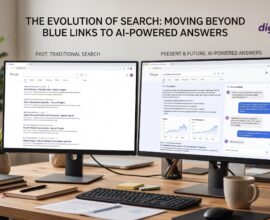
Entity clarity in 2026 is not about stuffing keywords or creating more content—it’s about making your app, features, and brand unmistakably understandable to AI systems and users. For B2C apps, most failures come from believing outdated SEO myths. Fixing these misconceptions improves discoverability, strengthens entity consistency, and aligns your app with answer engine optimization standards.
Today, even a well-designed app can struggle in search if its entity signals are unclear. That’s why many businesses offering digital marketing service Kolkata are focusing less on traffic hacks and more on structured clarity frameworks.
What Is Entity Clarity in B2C Apps?
Definition
Entity clarity refers to how clearly a search engine or AI system can identify and understand your app, its features, and its relationships with users, categories, and use cases.
For B2C apps, this includes app store listings, landing pages, feature descriptions, and even in-app content. If your app’s purpose or structure is ambiguous, AI systems won’t confidently surface it in results.
Why Do B2C Apps Struggle With Entity Clarity?
Unlike enterprise websites, B2C apps evolve quickly. New features, updates, and marketing campaigns often create inconsistency.
- Different naming for the same feature across pages
- Unstructured app descriptions
- Marketing copy that prioritizes creativity over clarity
These issues break entity consistency, making it harder for AI systems to interpret your app correctly.
Top Entity Clarity Myths (And The Truth)
Myth 1: More Content Means Better Visibility
Truth: More content without structure creates confusion. AI systems prefer fewer, well-defined pages with clear entity relationships.
Myth 2: Keywords Define Your App
Truth: Keywords help, but entities drive understanding. Your app must clearly define what it is, what it does, and who it serves.
Myth 3: Branding Can Replace Clarity
Truth: Creative branding without context weakens discoverability. AI cannot interpret vague messaging.
Myth 4: App Store Optimization Alone Is Enough
Truth: Entity clarity extends beyond app stores to websites, APIs, and external mentions.
How AI Systems Evaluate B2C Apps
AI search doesn’t “read” like humans—it maps relationships. This is why working with a generative AI SEO agency can help align your app with modern discovery systems.
Key Evaluation Signals
- Consistent naming of features and products
- Structured metadata and schema
- Clear category alignment
- Strong internal linking between related entities
If these signals are weak, your app may exist—but it won’t be recommended.
Step-by-Step Entity Clarity Audit Worksheet
Step 1: Map Core Entities
List your app, features, categories, and user segments. Define each clearly.
Step 2: Standardize Naming
Ensure the same feature is not described differently across pages or platforms.
Step 3: Structure Content
Use consistent templates for landing pages, feature descriptions, and FAQs.
Step 4: Implement Schema
Add structured data to define your app, reviews, and functionalities.
Step 5: Audit External Signals
Check how your app is mentioned across the web. Inconsistencies weaken trust.
Step 6: Optimize for Answer Engine Optimization
Ensure your content answers direct questions clearly so AI systems can extract it.
Quick Audit Checklist for B2C Apps
- Are all features named consistently across platforms?
- Does each page clearly define a single purpose?
- Is structured data implemented?
- Are duplicate or overlapping pages minimized?
- Does your content directly answer user queries?
If you struggle with these, consulting the best SEO company in Kolkata can help identify and fix clarity gaps.
Real Example: Fixing a B2C App’s Visibility
A fitness app had multiple names for the same feature—“Workout Plans,” “Training Modules,” and “Fitness Programs.”
After standardizing terminology and restructuring content:
- Feature pages became more discoverable
- AI-generated recommendations increased
- User engagement improved due to clearer navigation
The improvement didn’t come from adding content—it came from removing confusion.
Common Mistakes to Avoid
- Using creative but vague feature names
- Duplicating similar content across pages
- Ignoring structured data implementation
- Changing terminology frequently
These mistakes disrupt entity consistency and reduce your app’s ability to rank in AI-driven environments.
FAQs
What is entity clarity in simple terms?
It means making your app and its features easy for AI systems and users to understand through consistent and structured information.
Why do B2C apps need entity clarity?
Because AI-driven search relies on clear entity relationships to recommend apps and content.
How does answer engine optimization relate to entity clarity?
Answer engine optimization ensures your content is structured so AI systems can extract and present it directly in responses.
Can small apps benefit from entity clarity?
Yes, even small apps can improve visibility by maintaining consistent naming and structured content.
How often should I audit entity clarity?
Quarterly audits are recommended, especially after major updates or feature changes.
Conclusion
Entity clarity isn’t a technical checkbox—it’s a strategic advantage. In 2026, B2C apps that simplify their structure and communicate clearly will outperform those relying on clever messaging. When your app becomes easy for machines to understand, it naturally becomes easier for users to trust and adopt.
Blog Development Credits:
This piece was ideated by Amlan Maiti, crafted using AI tools like ChatGPT, Gemini, and Copilot, and refined with optimization expertise from Digital Piloto Private Limited.