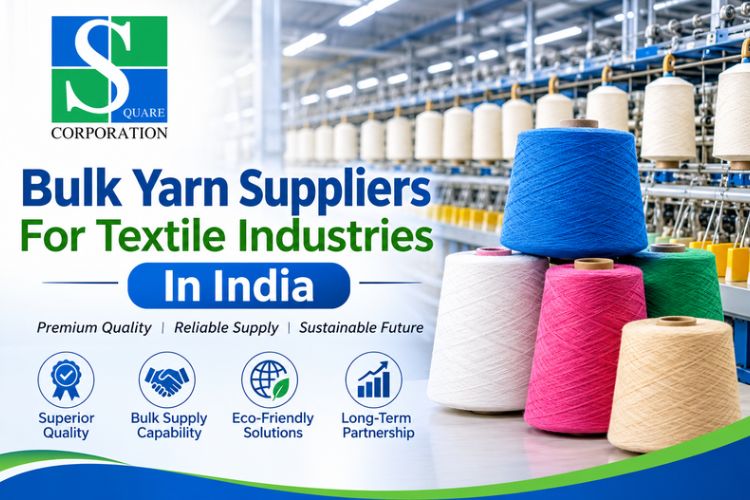
Bulk yarn procurement requires more than finding a manufacturer offering attractive prices. Textile industries need consistent yarn quality, dependable production capacity and timely deliveries. Businesses exploring Indian textile sourcing can consider established companies such as Textile Exporter Ludhiana while evaluating multiple suppliers against their manufacturing requirements.
India offers a diverse yarn manufacturing ecosystem, supporting knitting, weaving, hosiery, apparel and home textile production. The challenge is identifying a supplier capable of maintaining the same specifications across recurring bulk orders.
Also Read: The Future of B2B Commerce in the International Clothing Industry
India’s Cotton Yarn Export Market: What Buyers Should Know
India remains an important international cotton yarn sourcing destination. According to TEXPROCIL’s FY2025-26 trade statistics, cotton yarn export volume increased by 2.75%, reaching approximately 1.182 billion kilograms. However, export value declined by 4.35% to approximately US$3.41 billion.
This difference highlights why buyers should evaluate product specifications, quality and commercial terms instead of assuming that increased export volume automatically means better purchasing conditions.
Which Yarn Types Should Textile Industries Source?
Different textile applications require different yarn characteristics. Understanding the available options helps manufacturers shortlist suitable suppliers.
- Combed cotton yarn: Suitable for premium fabrics and finer textile applications where reduced fibre impurities are important.
- Carded cotton yarn: A practical option for general-purpose fabrics and cost-conscious manufacturing.
- Compact yarn: Offers improved yarn structure and is useful for applications requiring enhanced strength and reduced hairiness.
- Blended yarn: Cotton-polyester, cotton-viscose and other combinations support specific performance and cost requirements.
- Melange and slub yarn: Used for distinctive textures, visual effects and fashion-oriented fabric production.
- Organic and recycled yarn: Relevant for manufacturers developing products with specific sustainability and traceability requirements.
How to Identify Reliable Bulk Yarn Suppliers
Supplier selection should follow a measurable procurement process rather than relying solely on company reputation.
1. Check Manufacturing and Supply Capacity
Evaluate whether the supplier manufactures directly or sources through other mills. Ask about available production capacity, monthly supply commitments, minimum order quantities and backup arrangements during peak demand.
2. Examine Yarn Quality Parameters
Request technical specifications covering yarn count, fibre composition, spinning method, twist, strength, elongation, evenness and contamination. Where relevant, ask for batch-specific laboratory reports and compare samples against agreed tolerances. BIS IS 1670:2025 provides a recognized reference for testing single-end yarn breaking force and elongation.
3. Verify Certifications
For organic cotton sourcing, verify the supplier’s applicable GOTS Scope Certificate and shipment-specific Transaction Certificate. For Better Cotton claims, examine the relevant chain-of-custody documentation. OEKO-TEX STANDARD 100 addresses harmful-substance testing, not general environmental sustainability.
4. Compare Delivery and Commercial Terms
Evaluate production lead times, packaging standards, transportation arrangements, payment conditions and quotation validity. A supplier with dependable repeat deliveries can offer better operational value than a cheaper supplier with unpredictable quality.
Where Can Manufacturers Find Suitable Yarn Suppliers?
Manufacturers can explore established textile businesses and manufacturing networks in Punjab, Tamil Nadu and Gujarat. Companies such as Vardhman, KPR Mill and Nahar Spinning publish information about their yarn portfolios and production capabilities. Buyers should independently confirm availability, specifications and commercial terms before placing orders.
For cotton, blended and specialty yarn sourcing, manufacturers can also explore Yarn Suppliers in India and request product-specific quotations.
Best Practices Before Confirming a Bulk Order
- Approve a production-representative sample before bulk manufacturing.
- Document yarn count, composition and acceptable quality tolerances.
- Request a batch-wise quality report and packaging details.
- Confirm delivery schedules and quotation validity in writing.
- Maintain an approved sample for future repeat-order comparisons.
These steps help prevent manufacturing interruptions, fabric defects and avoidable procurement costs.
Frequently Asked Questions
What should buyers check before selecting yarn suppliers in India?
Evaluate yarn specifications, manufacturing capacity, quality reports, applicable certifications, MOQ, pricing and delivery reliability.
Which yarn is suitable for bulk textile manufacturing?
Combed, carded, compact, open-end and blended yarns serve different textile applications. The correct choice depends on the fabric structure, end use and required performance.
How can buyers verify organic cotton yarn suppliers?
Check the supplier’s valid GOTS Scope Certificate, applicable product scope and shipment-specific Transaction Certificate. Confirm certificate authenticity with the issuing certification body when necessary.
Why should manufacturers approve yarn samples before bulk orders?
Sample approval helps establish an agreed quality benchmark and reduces the risk of differences between initial samples and subsequent production batches.
Conclusion
Choosing suitable bulk yarn suppliers in India requires a balance of technical quality, manufacturing capacity, certification transparency and dependable logistics. Textile businesses should compare suppliers using identical specifications and approve samples before committing to large orders. A documented sourcing process creates stronger supplier relationships and supports consistent production.
Looking for dependable textile sourcing options? Contact Square Corporation to discuss yarn varieties, bulk requirements and customized sourcing possibilities.
Also Read: Leading Cotton Yarn Exporters for Global Textile Markets
Blog Development Credits:
This article was developed for Square Corporation, with AI-assisted research and drafting, followed by human-led review, SEO refinement and final optimization by Square Corporation.