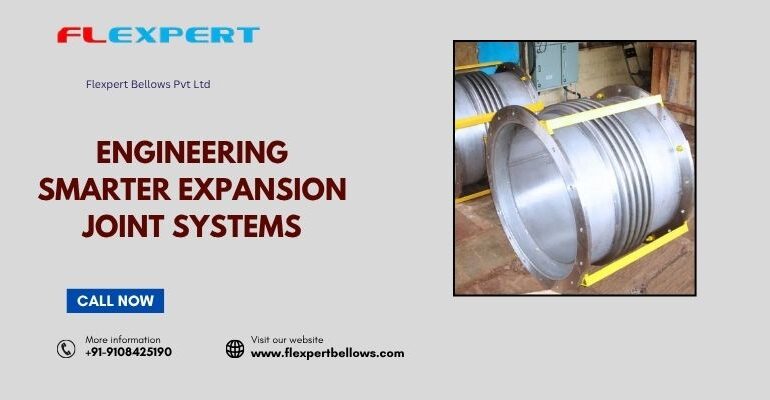
Designing industrial piping systems is rarely straightforward. Between thermal movement, vibration, and pressure fluctuations, even a small miscalculation can lead to costly failures. That’s why engineers pay close attention to expansion joints components that quietly absorb stress and keep systems running smoothly. A reliable exhaust expansion joints manufacturer understands that performance starts long before installation it begins at the design stage.
So, what really goes into designing high-performance expansion joints? It’s not just about materials or dimensions it’s about balancing multiple variables while anticipating real-world conditions.
Why Design Matters More Than You Think?
Expansion joints might seem like simple connectors, but they play a critical role in absorbing thermal expansion, reducing vibration, and preventing structural damage. According to the American Society of Mechanical Engineers (ASME), improper handling of thermal stress is a leading cause of piping system failures in industrial setups.
That statistic alone highlights the importance of thoughtful engineering. A well-designed expansion joint doesn’t just fit into a system it enhances its longevity and reliability.
Key Design Considerations for High Performance
1. Material Selection
The choice of material can make or break the performance of an expansion joint. Engineers must consider factors like temperature resistance, corrosion exposure, and pressure limits.
- Stainless steel for high-temperature environments
- Alloy materials for chemical resistance
- Multi-ply constructions for added flexibility
Selecting the right material ensures durability while maintaining flexibility two qualities that don’t always go hand in hand.
2. Movement and Flexibility Requirements
Expansion joints are designed to absorb different types of movement:
- Axial movement (expansion and contraction)
- Lateral movement (sideways displacement)
- Angular movement (bending or rotation)
Understanding these movements is crucial. Overestimating can lead to unnecessary costs, while underestimating can result in system failure.
3. Pressure and Temperature Conditions
Industrial systems often operate under extreme conditions. High temperatures can weaken materials, while pressure fluctuations can strain joints.
This is where expertise from a diesel exhaust expansion joints manufacturer becomes invaluable, especially in applications involving engines and exhaust systems where both heat and vibration are constant challenges.
Designing for Real-World Applications
In theory, everything looks perfect on paper. But real-world conditions? They’re far less predictable. Engineers must account for:
- Installation constraints and available space
- Alignment issues in piping systems
- External forces like wind, seismic activity, or mechanical loads
For instance, in power plants or marine systems, expansion joints are exposed to continuous vibration. Without proper design adjustments, even the best materials won’t hold up over time.
The Role of Vibration and Noise Control
Beyond movement and pressure, vibration control is another critical factor. Excessive vibration can lead to fatigue failure, especially in metal bellows.
Interestingly, solutions like acoustic joints are often used alongside expansion joints to minimize noise and vibration. If you’re curious about this aspect, check out How Acoustic Joints Help Reduce Noise in Piping Systems? for a deeper dive.
Common Design Mistakes to Avoid
Even experienced engineers can overlook certain aspects. Here are a few common pitfalls:
- Ignoring thermal expansion calculations
- Using incorrect material grades
- Overlooking installation alignment
- Failing to account for vibration fatigue
Avoiding these mistakes isn’t just about technical accuracy it’s about ensuring long-term system performance and safety.
Benefits of Optimized Expansion Joint Design
When all design elements come together effectively, the results are noticeable:
- Extended lifespan of piping systems
- Reduced maintenance and downtime
- Improved operational efficiency
- Enhanced safety in high-risk environments
In many ways, a well-designed expansion joint acts like a silent guardian absorbing stress so the rest of the system doesn’t have to.
FAQs
1. What is the primary function of an expansion joint?
Expansion joints absorb thermal expansion, vibration, and movement in piping systems, preventing structural damage and ensuring smooth operation.
2. How do you choose the right material for expansion joints?
Material selection depends on temperature, pressure, and environmental conditions such as corrosion or chemical exposure.
3. Why is flexibility important in expansion joints?
Flexibility allows the joint to absorb movement without transferring stress to the piping system, reducing the risk of failure.
4. Can poor design lead to system failure?
Yes, improper design can result in leaks, fatigue cracks, and even complete system breakdown over time.
Final Thoughts
Designing high-performance expansion joints isn’t just a technical task it’s a balancing act between science, experience, and foresight. When done right, it ensures that complex industrial systems operate safely and efficiently, even under demanding conditions. In the end, the true value of a well-designed expansion joint lies in what it prevents failures, downtime, and unexpected costs.