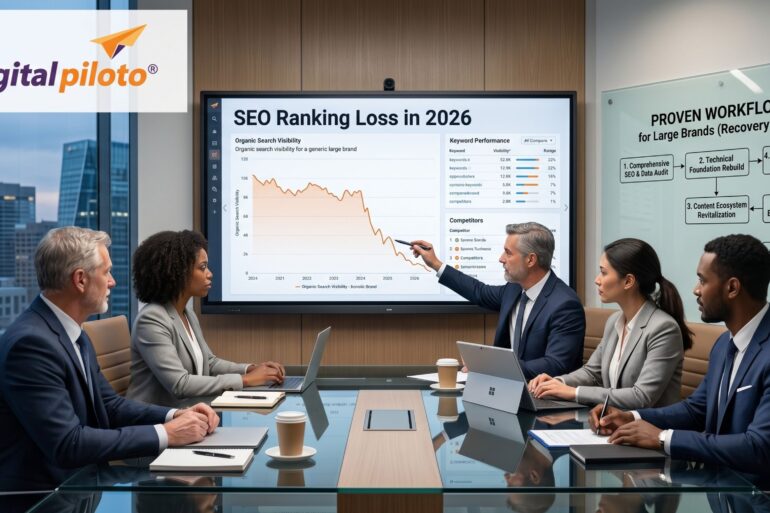
Ranking loss in 2026 is rarely caused by a single Google update—it’s usually the result of broken content clarity, weak entity signals, or misalignment with AI-driven search behavior. Enterprise brands must stop chasing algorithm myths and instead build a structured workflow that aligns with search evolution, user intent, and machine-level trust. Partnering with a best SEO service provider in Kolkata can help establish this long-term stability.
What Is the Ranking Loss Myth? (Definition Format)
Ranking loss myth: The belief that traffic drops are primarily caused by algorithm penalties or updates, rather than deeper issues like content relevance, technical gaps, or shifting user behavior.
- Reality: Most ranking drops are gradual and systemic
- Myth: Google “penalized” your site overnight
- Truth: Your content or structure no longer matches search expectations
For enterprise brands, this misunderstanding leads to reactive decisions instead of strategic fixes.
Why Enterprise Brands Experience Ranking Drops
Large-scale websites often face complexity challenges. With thousands of pages, multiple teams, and legacy systems, even small inconsistencies can compound over time.
The real causes usually include:
- Fragmented content strategy across departments
- Outdated site architecture and internal linking
- Inconsistent entity signals and messaging
- Poor alignment with AI-driven search behavior
This is where understanding search evolution becomes critical—search is no longer just about rankings, but about relevance and clarity.
Enterprise Workflow to Diagnose Ranking Loss (Step-by-Step)
Step 1: Audit Indexing and Technical Health
- Check crawlability and indexing coverage
- Identify duplicate or thin content pages
- Fix broken links and redirect chains
Technical issues often silently reduce visibility.
Step 2: Evaluate Content Intent Alignment
- Map each page to a clear user intent
- Remove or merge overlapping content
- Update outdated information
If your content doesn’t solve user problems, rankings will drop.
Step 3: Strengthen Entity and Brand Signals
- Ensure consistent messaging across all platforms
- Standardize product and service descriptions
- Build authority through thought leadership
AI systems rely heavily on entity consistency to determine trust.
Step 4: Optimize for AI and Zero-Click Environments
- Structure content for easy extraction
- Use FAQs, summaries, and clear headings
- Focus on direct, concise answers
This improves visibility in AI-generated responses.
Step 5: Monitor Engagement and Behavioral Signals
- Analyze bounce rates and time-on-page
- Improve UX and navigation
- Enhance content readability
User behavior is a strong indicator of content quality.
Enterprise Audit Checklist (Bullet Format)
Use this checklist to quickly assess your site:
- Indexing: Are all key pages accessible?
- Content clarity: Does each page solve a specific problem?
- Internal linking: Is navigation logical and structured?
- Entity consistency: Is your brand message unified?
- Engagement signals: Are users interacting meaningfully?
This checklist helps identify systemic issues rather than surface-level problems.
The Role of AI and Security in Modern SEO
In 2026, enterprise SEO is not just about visibility—it’s also about trust and security. AI systems evaluate content authenticity and reliability.
This is where prompt injection defense becomes relevant. Enterprises must ensure their content and data systems are protected from manipulation that could affect AI interpretation.
Additionally, working with a generative engine optimization specialist can help align your content with AI-driven search ecosystems.
Real Enterprise Insight
A large enterprise brand we worked with experienced a 30% traffic drop. Initially, they blamed algorithm updates.
After analysis, we found:
- Duplicate content across multiple departments
- Inconsistent product messaging
- Poor internal linking structure
We streamlined content, improved structure, and aligned messaging.
Within months, rankings stabilized and traffic recovered—without chasing algorithm updates.
This is where a reliable digital marketing service Kolkata plays a crucial role in execution.
Key Metrics to Track
- Organic traffic trends: Overall visibility
- Keyword rankings: Position changes
- Engagement metrics: User interaction quality
- Index coverage: Technical health
Tracking these metrics helps identify issues early.
FAQs
1. What causes ranking loss in 2026?
Ranking loss is usually caused by content misalignment, technical issues, or weak entity signals—not just algorithm updates.
2. Is Google penalizing my site?
In most cases, no. Drops are due to relevance and quality issues rather than penalties.
3. How can enterprises recover from ranking loss?
By auditing technical health, improving content clarity, and aligning with AI-driven search behavior.
4. What is prompt injection defense in SEO?
It refers to protecting AI systems from manipulated inputs that could affect content interpretation and trust signals.
5. How long does recovery take?
Recovery depends on the severity of issues but typically takes weeks to months with consistent improvements.
Conclusion
Ranking loss in 2026 isn’t a mystery—it’s a signal. Enterprise brands that shift from reactive fixes to structured workflows will not only recover but build long-term resilience in an AI-driven search landscape.
Blog Development Credits:
This article was thoughtfully conceptualized by Amlan Maiti, developed using advanced AI research tools, and refined with strategic insights from Digital Piloto Private Limited.