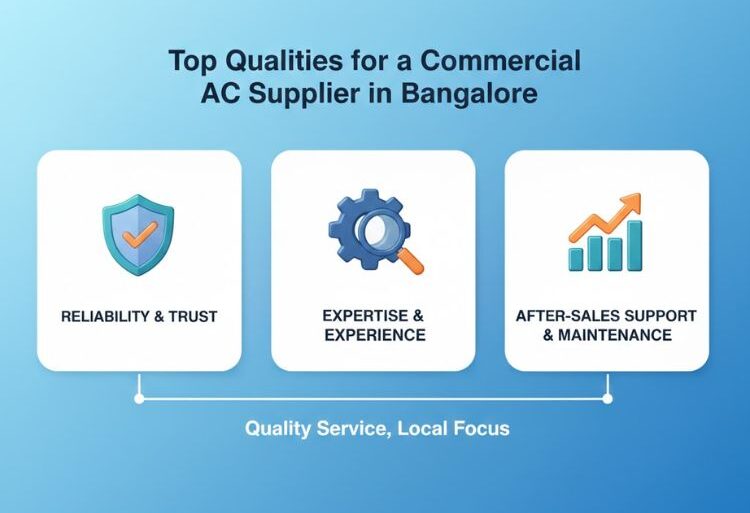
HVAC Engineer believes that picking a commercial AC supplier isn’t just a purchase decision—it’s a long-term business relationship. Bangalore’s heat, humidity, and high-rise offices demand systems that work smart, not just hard. If you’re running a business, the supplier you choose can affect everything from employee comfort to monthly power bills.
Whether you manage a co-working space or a hospital, finding the Best Commercial AC Supplier In Bangalore means looking beyond glossy brochures. It’s about real-world performance, support, and the ability to adapt to your specific business needs.
- Proven Experience with Commercial Projects
Residential ACs are one thing. Cooling a 20,000 sq. ft. office floor or a multi-storey mall is a different beast entirely. A good supplier should have hands-on experience with commercial HVAC systems—VRF units, ducted setups, and centralized cooling.
- They should understand load calculations, not guesswork.
- They should offer tailored designs for restaurants, offices, and retail outlets.
- They should show past commercial installations, not just promise them.
Think of it like choosing a surgeon—you don’t want someone who’s only done check-ups performing open-heart surgery.
- Energy Efficiency Knowledge That Saves Money
Power bills are often a company’s silent expense. According to the U.S. Department of Energy, commercial buildings can cut cooling energy use by nearly 20% with properly sized and maintained systems (energy.gov). A smart supplier doesn’t just sell you a unit; they recommend energy-efficient AC systems that match your building layout.
Look for suppliers who:
- Promote inverter or high-SEER-rated systems.
- Explain zoning instead of pushing oversized machines.
- Talk about airflow optimization, not just tonnage.
This is where professional insight beats price tags every time.
- Strong Installation & Maintenance Support
Installation quality decides whether your AC will hum quietly or scream for repairs every summer. A reliable supplier should have trained technicians who follow proper procedures—duct sealing, drainage slope, and electrical safety.
Midway through your AC lifecycle, service becomes crucial. Businesses that rely on quick fixes benefit from partners who also offer AC Repair In Bengaluru with genuine parts and predictable response times.
A supplier who disappears after installation is like a builder who vanishes after handing over keys.
- Compliance with Safety & Environmental Standards
Refrigerants and ventilation rules are tightening globally. The U.S. Environmental Protection Agency reports that better refrigerant management can significantly reduce emissions linked to cooling systems (epa.gov). A trustworthy supplier stays updated on eco-friendly refrigerants and safety codes.
They should guide you on:
- Low-GWP refrigerants
- Fire safety in ducting systems
- Indoor air quality solutions for staff well-being
This matters more for hospitals, schools, and food businesses where air quality is non-negotiable.
- Transparent Pricing & Honest Consultation
Commercial AC systems aren’t cheap, but surprises shouldn’t be part of the deal. A good supplier explains what you’re paying for—equipment, labor, wiring, and future maintenance.
They also ask questions before quoting:
- How many hours will the system run daily?
- What’s the building layout?
- Is future expansion planned?
That kind of curiosity signals partnership, not just sales.
- Flexible AMC & Long-Term Service Options
Annual Maintenance Contracts (AMC) are lifesavers for busy businesses. A supplier who offers flexible AMC plans helps prevent sudden breakdowns and budget shocks. Regular servicing keeps filters clean, compressors healthy, and power usage under control.
In the long run, maintenance beats emergency calls every time—both financially and operationally.
Frequently Asked Questions
Q1: Why should businesses avoid residential AC suppliers?
Commercial spaces have different cooling loads and airflow needs. Residential suppliers may lack the tools or expertise for large-scale systems.
Q2: How often should commercial AC systems be serviced?
Ideally, once every 3–4 months for heavy-use environments like offices and restaurants.
Q3: Are energy-efficient systems worth the higher upfront cost?
Yes. Lower power bills and fewer repairs usually offset the initial investment within a few years.
Q4: What industries benefit most from professional commercial HVAC services?
IT offices, hospitals, retail chains, and hospitality businesses gain the most from specialized cooling solutions.
Final Thoughts
Choosing a commercial AC supplier in Bangalore is about foresight. The right partner understands your business, respects your budget, and plans for your future. Comfort isn’t a luxury for companies—it’s a productivity tool. And like any tool, it works best when chosen wisely.