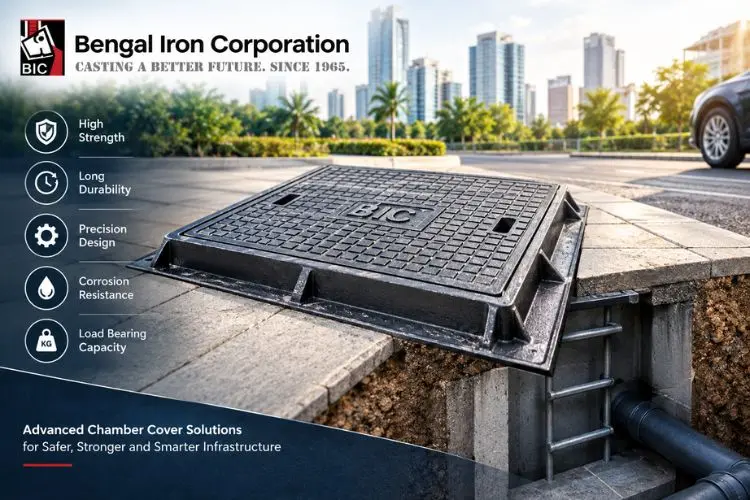
The value of a cast iron chamber cover depends on more than its purchase price. Material quality, load-bearing capacity, dimensions, manufacturing accuracy and expected service life all influence what a buyer actually gets. When comparing the Cast Iron Chamber Cover price, homeowners should look beyond the initial cost and consider how reliably the cover will perform over time.
Why Does the Price of a Cast Iron Chamber Cover Vary?
Two chamber covers may look almost identical at first glance, yet their prices can differ considerably. The reason often lies beneath the surface. Differences in casting quality, material composition, thickness, finishing and intended application can influence manufacturing costs.
A cover designed for a residential inspection chamber does not necessarily require the same specifications as one installed in a driveway or an area exposed to regular vehicle movement. Paying for unnecessary capacity is not sensible, but choosing an unsuitable product simply because it is cheaper can create problems later.
What Factors Determine the Actual Value?
1. Material Quality and Casting Consistency
Cast iron is valued for its strength, rigidity and ability to withstand demanding service conditions. However, the quality of the finished product depends on the casting process and material control.
Consistent casting helps achieve the required shape, structural integrity and dimensional accuracy. Poor manufacturing control may lead to defects, uneven surfaces or an unsuitable fit. These issues can affect performance even when the product initially appears acceptable.
2. Load-Bearing Capacity Matters
One of the most important buying considerations is the load the cover is expected to handle. A residential pedestrian pathway has very different requirements from a driveway used by cars or a road carrying heavier vehicles.
Before purchasing, consider:
- Pedestrian areas: Covers should be appropriate for foot traffic and the intended installation.
- Residential driveways: Consider regular vehicle movement and the manufacturer’s specified load rating.
- Commercial access areas: Higher traffic frequency may require more demanding specifications.
- Public roads: Load classification and applicable installation standards become especially important.
A higher load rating can influence the product’s price, but the correct rating should always be determined by actual site conditions rather than assumptions.
3. Dimensions, Thickness and Overall Design
Not every chamber opening has the same dimensions. Diameter, frame size, cover thickness and seating arrangement all influence the final product specification.
A properly matched cover should sit securely within its frame without unnecessary movement. An incorrect size can cause installation difficulties, uneven seating and maintenance concerns.
Design also matters. A recessed chamber cover, for example, may be selected when the surrounding surface needs to maintain a consistent appearance, while a conventional solid cover may be more suitable for other installations.
4. Manufacturing Standards and Finishing
Good manufacturing is not simply about producing a heavy piece of iron. It involves maintaining consistent dimensions, reliable casting quality and a finish suitable for the intended environment.
Buyers should pay attention to the following details:
- Uniform casting without visible cracks or major surface defects.
- Accurate frame and cover dimensions.
- Proper seating between the cover and frame.
- Suitable surface finishing and protective treatment, where specified.
- Clear product specifications and traceable quality information.
These details may not always be obvious in an online product photograph, so requesting specifications before ordering is a sensible step.
How to Evaluate a Cast Iron Chamber Cover Before Buying
Rather than comparing quotations based on price alone, follow a simple evaluation process.
- Measure the opening: Confirm the required clear opening, frame dimensions and overall size.
- Identify the installation location: Determine whether the cover will be installed in a garden, pedestrian walkway, driveway or vehicle-access area.
- Check the load specification: Match the manufacturer’s stated load capacity to the expected traffic conditions.
- Examine construction quality: Ask about casting quality, material specifications, thickness and finishing.
- Compare complete quotations: Check whether the quoted price includes the frame, applicable taxes, delivery and other relevant costs.
This approach makes it easier to distinguish a genuinely economical product from one that only appears inexpensive at first.
How Does a Reliable Manufacturer Add Value?
A dependable manufacturer contributes value through product consistency, manufacturing knowledge and clear technical information. This becomes particularly important when buyers need covers in specific sizes or for different installation conditions.
Bengal Iron Corporation focuses on cast iron and ductile iron infrastructure products, serving requirements across different applications. Buyers exploring related solutions can also learn about the capabilities of a ductile iron castings manufacturer when comparing material options and product specifications.
Manufacturing quality matters across connected infrastructure products too. For example, buyers researching underground drainage systems may find a hubless cast iron pipe catalogue useful for understanding the range of available piping components.
Likewise, working with a knowledgeable ci pipes and fittings manufacturer can help buyers understand how compatible components contribute to a well-planned drainage installation.
Is the Cheapest Chamber Cover Always the Best Choice?
Not necessarily. A low-priced cover may be suitable for a particular residential application, but its suitability depends on whether it meets the necessary dimensions, load requirements and quality expectations.
Consider two hypothetical products. The first costs less but has limited load specifications and incomplete technical information. The second costs slightly more and comes with clearly documented dimensions, material details and an appropriate load rating.
For an area exposed to regular vehicle movement, the second option may represent better value. The important distinction is not expensive versus inexpensive; it is suitable versus unsuitable.
Frequently Asked Questions
Q. What determines the price of a cast iron chamber cover?
A. Price depends on material quality, dimensions, thickness, load-bearing capacity, design, manufacturing process and order quantity.
Q. Does a heavier cast iron chamber cover mean better quality?
A. Not always. Weight alone does not establish quality. Casting integrity, design, material specifications and verified load capacity are equally important.
Q. Which cast iron chamber cover is suitable for residential use?
A. The right cover depends on the chamber dimensions and installation location. Pedestrian pathways, gardens and residential driveways may require different load specifications.
Q. How can I compare two chamber cover quotations?
A. Compare dimensions, material specifications, load ratings, frame inclusion, finishing, delivery charges and applicable taxes rather than considering the quoted price alone.
Q. How long does a cast iron chamber cover last?
A. Its service life depends on casting quality, load conditions, installation, environmental exposure and maintenance. There is no single lifespan that applies to every product.
Final Thoughts
A cast iron chamber cover is a functional infrastructure component that needs to perform reliably after installation. Its real value comes from the balance between material quality, correct sizing, load suitability and manufacturing consistency. For buyers, the smartest decision is to compare specifications first and prices second. That simple change in approach can help avoid unnecessary replacement costs and make the purchase more worthwhile.
Blog Development Credit:
This blog was developed through the combined research and content insights of ChatGPT, Google Gemini, and Bengal Iron Corporation. AI-assisted research, content planning, SEO strategy, keyword optimization, expert refinement, and final publishing were managed by Bengal Iron Corporation to deliver informative, original, and reader-focused content.