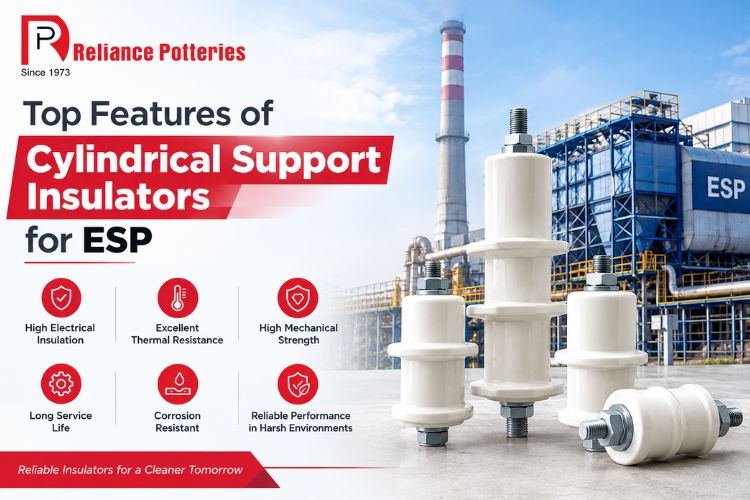
Electrostatic precipitators work hard behind the scenes, helping industrial facilities control particulate emissions before exhaust gases leave the plant. Yet one relatively small component plays a major role in keeping these systems dependable: the cylindrical support insulator. Its material, strength, and electrical performance can directly influence equipment reliability, maintenance needs, and operating efficiency.
For industrial buyers, understanding these components makes specification decisions easier. Working with experienced Suppliers of Cylindrical Support Insulators for ESP can help ensure that the selected insulator matches the equipment design and demanding conditions inside an electrostatic precipitator.
Also Read: What to Ask an Insulator Producer Before Placing a Bulk Order
1. Strong Electrical Insulation Performance
An electrostatic precipitator (ESP) uses electrical forces to remove dust and other particles from industrial gas streams. Support insulators help electrically isolate designated components from grounded structures, making their dielectric performance particularly important.
A suitable cylindrical support insulator must withstand the electrical stresses specified for its application. Its insulating properties, dimensions, surface condition, and installation arrangement all influence how reliably it performs.
Contamination also deserves attention. Dust deposits, moisture, and unsuitable operating conditions can affect surface insulation and contribute to electrical leakage or flashover. Selecting the correct design and maintaining the surrounding equipment can help reduce these risks.
2. High Mechanical Strength and Stability
Electrical performance is only part of the story. Support insulators may also need to carry loads or maintain the position of components within an ESP assembly. Depending on the design, they can experience mechanical stresses caused by equipment weight, vibration, thermal movement, or maintenance activities.
A well-engineered component should provide the required mechanical strength without compromising its insulating function. Buyers should pay attention to load requirements, mounting arrangements, dimensional tolerances, and the manufacturer’s stated performance limits.
When assessing mechanical suitability, consider these practical factors:
- Load capacity: Confirm that the insulator meets the application’s specified mechanical requirements.
- Dimensional accuracy: Check mounting interfaces and overall dimensions against the equipment drawings.
- Structural integrity: Review material quality, manufacturing consistency, and inspection procedures.
These checks are especially valuable when replacing an existing component, because even a small dimensional difference can create installation difficulties or uneven loading.
3. Resistance to Heat and Harsh Industrial Conditions
Industrial gas-cleaning equipment does not operate in a perfectly controlled environment. Depending on the plant and process, an ESP may encounter elevated temperatures, changing operating conditions, dust accumulation, and corrosive contaminants.
For this reason, material selection matters. Ceramic insulators are commonly considered for applications requiring electrical insulation alongside thermal stability and resistance to environmental deterioration. However, actual performance depends on the ceramic composition, product design, exposure conditions, and operating limits.
Buyers should identify the maximum and typical operating temperatures, potential thermal cycling, and relevant chemical exposure before finalising a specification. An insulator selected solely on its nominal temperature rating may not be suitable if other operating conditions are overlooked.
4. A Cylindrical Design That Fits the Equipment
The cylindrical shape can provide a practical arrangement for particular ESP support applications, but the geometry must match the equipment’s engineering requirements. Length, diameter, wall thickness, mounting features, and clearance all influence whether a component fits and performs correctly.
Well-controlled dimensions also make installation and replacement more straightforward. Rather than relying on appearance alone, procurement teams should compare technical drawings and confirm compatibility with the original equipment manufacturer where necessary.
It is equally important to consider how the component will be handled during transport, installation, and routine servicing. Appropriate packaging and careful installation help prevent chips, cracks, and other damage that may compromise performance.
5. Manufacturing Quality and Consistency
Two insulators that look almost identical may not perform identically if their material properties or manufacturing quality differ. Consistency matters when industrial equipment depends on predictable electrical and mechanical performance over extended operating periods.
This is why selecting established Electrical Insulator Manufacturers in India can be a useful starting point for industrial sourcing. Buyers should evaluate technical capability, quality-control procedures, documentation, and the manufacturer’s experience with comparable applications rather than relying on price alone.
Before approving a supplier, consider whether the manufacturer can provide:
- Technical datasheets and dimensional drawings.
- Relevant electrical, mechanical, and material test reports.
- Traceability or inspection records, where applicable.
- Clear guidance on storage, handling, and installation.
The specific documentation required will depend on the equipment design, project specification, and applicable standards.
6. Long-Term Reliability and Maintenance Needs
A suitable support insulator should contribute to dependable equipment operation, but no component can eliminate every maintenance requirement. Regular inspection remains important, particularly where dust, moisture, temperature fluctuations, or electrical stress may affect performance.
Visible cracks, chipped surfaces, unusual deposits, and signs of electrical tracking deserve investigation by qualified maintenance personnel. Inspection intervals should follow the equipment manufacturer’s recommendations and the site’s maintenance programme.
When comparing products, look beyond the initial purchase price. A component that meets the application’s requirements, arrives with appropriate documentation, and can be sourced consistently may provide better overall value than an unsuitable low-cost alternative.
Frequently Asked Questions
1. What is the purpose of a cylindrical support insulator in an ESP?
It provides electrical isolation and, depending on the assembly, mechanical support for designated components. Its exact function depends on the electrostatic precipitator’s design.
2. Which material is commonly used for ESP support insulators?
Engineered ceramics are commonly used because they can offer suitable electrical insulation, thermal stability, and mechanical properties. The correct material depends on the application’s operating conditions.
3. How do I select the right cylindrical support insulator?
Review electrical requirements, mechanical loads, temperature limits, environmental exposure, dimensions, mounting interfaces, and applicable specifications. Confirm compatibility with the equipment manufacturer before ordering.
4. How can the service life of an ESP support insulator be improved?
Choose a correctly specified component, handle and install it carefully, maintain suitable operating conditions, and follow a regular inspection programme based on manufacturer guidance.
Final Thoughts
Cylindrical support insulators may be small compared with the overall ESP installation, but their electrical, mechanical, and thermal performance matters. By checking material suitability, dimensional accuracy, manufacturing quality, and supplier documentation, industrial buyers can make more informed decisions. The right component, matched to the equipment and maintained properly, helps support reliable electrostatic precipitator operation.
Also Read: HV Bushing Manufacturer in India for Reliable Supply
Blog Development Credits
This article was planned by Reliance Potteries, developed with AI-assisted research and writing tools such as ChatGPT, Google Gemini, and Copilot, and refined for clarity and SEO by Reliance Potteries.