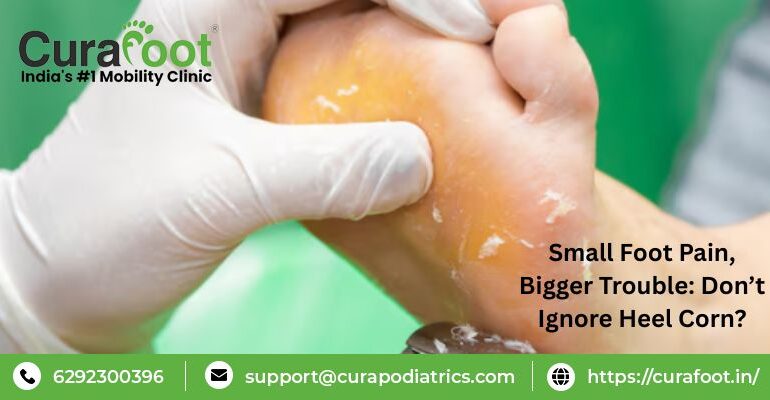
It often starts as a tiny discomfort something that feels like a pebble stuck inside your shoe. You ignore it, switch footwear, maybe even blame a long day on your feet. But heel corns have a sneaky way of growing from a minor annoyance into a problem that quietly changes how you walk, stand, and move.
Many people delay heel corn treatment, assuming it will disappear on its own. Unfortunately, that’s rarely how it works. Left untreated, heel corns can create pressure imbalances, pain, and even complications affecting your overall foot health.
What Exactly Is a Heel Corn?
A heel corn is a thickened patch of hardened skin caused by repeated friction or pressure. Think of it as your body trying perhaps too enthusiastically to protect itself. Tight shoes, uneven walking patterns, prolonged standing, or foot deformities often trigger corn formation.
According to information from the U.S. National Library of Medicine, corns and calluses develop as protective responses to repeated friction, but painful corns may require professional attention if discomfort persists.
Common reasons heel corns develop:
- Poorly fitting footwear that constantly rubs the heel
- Standing or walking for long hours on hard surfaces
- Foot structure issues like flat feet or abnormal gait
Why Ignoring Heel Corn Is Riskier Than You Think?
Here’s the thing your feet are remarkably good at adapting. When one spot hurts, your body shifts weight elsewhere without you even realizing it. Sounds clever, right? Except this compensation often creates a chain reaction.
A neglected heel corn may alter walking posture, forcing pressure onto your ankles, knees, or lower back. Over time, what began as localized heel discomfort can evolve into chronic pain patterns.
Problems that may develop if ignored:
- Changes in walking posture and body alignment
- Increased pressure on surrounding foot areas
- Recurring pain while standing or climbing stairs
In people with diabetes or poor circulation, untreated heel corns can become even more concerning. Small cracks or pressure wounds sometimes increase infection risks, making preventive foot care especially important.
When Corns Begin Affecting Everyday Life?
There’s usually a moment when people realize something feels “off.” Maybe they avoid long walks, stop wearing certain shoes, or unconsciously shift body weight to avoid pain.
What’s tricky is that many people wait far too long before seeking help. By then, the condition has often become deeper, more painful, and harder to manage with simple home care.
For individuals seeking professional relief, options like best corns and calluses treatment in Kolkata can help identify the root cause rather than simply trimming hardened skin temporarily.
The Hidden Link Between Footwear and Heel Corns
Let’s be honest: comfort and fashion don’t always cooperate. Shoes that look great aren’t necessarily kind to your feet. High heels, narrow toe boxes, and worn-out soles often create friction points that repeatedly stress the heel.
Simple footwear habits that help:
- Choose shoes with proper cushioning and heel support
- Avoid overly tight footwear for long hours
- Use orthotic inserts if advised by a podiatrist
Sometimes prevention is surprisingly ordinary better footwear, balanced pressure, and a little awareness go a long way.
Why Professional Care Matters?
Heel corns may seem harmless, but self-cutting, scraping, or overusing medicated pads can occasionally worsen irritation. That’s where expert guidance becomes valuable.
If you’re unsure whether a corn requires medical attention, The Importance of Knowing When Corns and Calluses Need Specialized Podiatric Care explains when it’s wise to move beyond home remedies.
Professional assessment often identifies hidden contributors such as gait imbalance, pressure points, or structural foot conditions that would otherwise go unnoticed.
FAQs
1. Can heel corns go away on their own?
Mild heel corns may improve if pressure is removed, but persistent corns often require professional evaluation and treatment.
2. Are heel corns dangerous?
While not always dangerous, untreated heel corns can lead to pain, posture issues, and complications in people with diabetes.
3. What causes heel corn pain?
Pain usually occurs when thickened skin presses against underlying nerves or soft tissue during walking or standing.
4. Can footwear help prevent heel corns?
Yes, properly fitted shoes with cushioning and support can reduce friction and lower the risk of recurring corns.
Final Thoughts
Ignoring heel corn may seem harmless at first, but feet have a way of reminding us when something isn’t right. Small discomforts can quietly snowball into mobility problems, posture changes, and lingering pain. Treating heel corn early often means less discomfort, easier recovery, and healthier movement in the long run.