Every piping system is designed to move, whether from heat, vibration, pressure changes, or equipment operation. Yet, many businesses underestimate how much these small movements can affect long-term performance. Understanding the difference between axial and lateral expansion joints helps plant managers, engineers, and business owners make smarter investments that improve reliability while reducing costly maintenance and unexpected downtime.
At Flexpert Bellows, selecting the right Metal Expansion Joints begins with understanding how pipelines actually behave under operating conditions. Whether you’re managing a manufacturing facility, HVAC installation, power plant, or chemical processing unit, choosing the correct expansion joint can significantly improve system safety, efficiency, and equipment lifespan.
Why Expansion Movement Should Never Be Ignored?
Pipes naturally expand and contract as temperatures fluctuate. Pumps and compressors also introduce vibration, while slight structural shifts can place additional stress on piping systems. Without properly designed expansion joints, these forces are transferred directly to expensive equipment, often leading to leaks, cracked welds, damaged supports, and premature component failure.
According to the U.S. Department of Energy, improving industrial system reliability through preventive engineering practices can significantly reduce maintenance costs and improve operational efficiency.
What Are Axial Metal Expansion Joints?
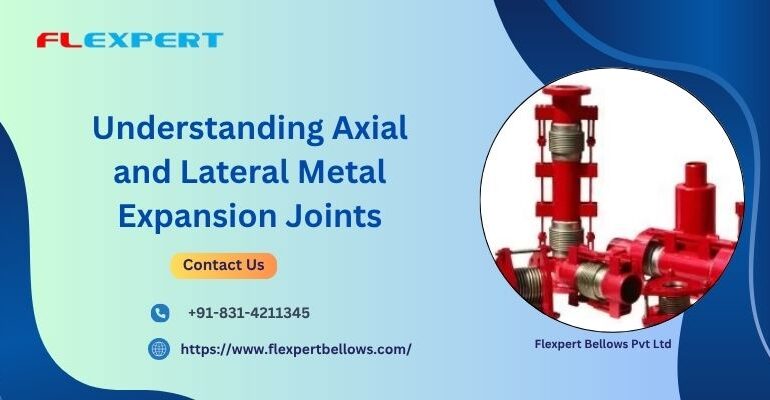
Axial metal expansion joints are specifically designed to absorb movement along the same direction as the pipe’s centerline. Simply put, they compress or extend as the pipeline expands or contracts.
Common Applications
- Steam distribution pipelines
- Boiler systems
- Power generation plants
- District heating networks
- Long straight industrial pipelines
Think of an axial joint like a spring inside a controlled environment. It stretches and compresses repeatedly, protecting surrounding equipment from thermal stress while maintaining system integrity.
Understanding Lateral Metal Expansion Joints
Unlike axial joints, lateral expansion joints are engineered to accommodate movement that occurs perpendicular to the pipe’s centerline. Buildings settle over time, equipment shifts slightly, and complex piping layouts naturally create sideways movement that requires flexibility.
These joints are particularly valuable where pipelines change direction or where structural movement cannot be completely eliminated.
Where Lateral Expansion Joints Perform Best?
- Chemical processing plants
- HVAC installations
- Refineries
- Marine piping systems
- Industrial processing facilities
Axial vs. Lateral: Which One Fits Your Project?
The answer isn’t about choosing the “better” option—it depends entirely on the type of movement your system experiences.
- Axial Expansion Joints: Best for straight-line thermal expansion.
- Lateral Expansion Joints: Ideal for sideways movement and structural displacement.
- Combination Designs: Some industrial systems require engineered solutions that absorb multiple movement types simultaneously.
Working with an experienced Metal Bellows Expansion Joints Manufacturer ensures every operating condition is carefully evaluated before selecting the appropriate product. This approach minimizes future maintenance while maximizing system performance.
Factors to Consider Before Selecting an Expansion Joint
No two industrial systems operate under identical conditions. Before specifying an expansion joint, engineers typically evaluate several important variables.
- Operating temperature range
- Working pressure
- Expected movement direction
- Pipe diameter
- Media flowing through the pipeline
- Available installation space
- Required service life
Ignoring even one of these factors can shorten equipment life or create avoidable maintenance challenges later.
The Role of Metal Bellows in Modern Engineering
The flexibility inside every expansion joint comes from precisely engineered metal bellows. These thin-walled corrugated components absorb movement while maintaining pressure integrity. If you’re interested in understanding their broader industrial applications, read How Are Metal Bellows Crucial in Vacuum Technology?. The article highlights how precision bellows support demanding environments beyond conventional piping systems.
Additional SEO keywords naturally related to this topic include industrial expansion joints, stainless steel bellows, and pipeline expansion solutions, all of which play an important role in reliable industrial operations.
Business Benefits of Choosing the Right Expansion Joint
Beyond protecting equipment, selecting the correct expansion joint delivers measurable operational advantages.
- Reduced maintenance expenses
- Longer equipment service life
- Improved plant reliability
- Lower risk of unexpected shutdowns
- Enhanced workplace safety
For business owners, these benefits often translate into improved productivity and lower total operating costs over the lifetime of the facility.
Frequently Asked Questions
What is the main difference between axial and lateral expansion joints?
Axial expansion joints absorb movement along the pipe’s length, while lateral expansion joints accommodate sideways movement caused by structural shifts or directional changes.
Where are axial expansion joints commonly used?
They are widely installed in steam pipelines, boiler systems, power plants, and long straight piping networks experiencing thermal expansion.
Can one expansion joint handle multiple movement directions?
Yes. Certain engineered expansion joints are designed to accommodate axial, lateral, and angular movement simultaneously, depending on application requirements.
Why should businesses invest in high-quality metal expansion joints?
Quality expansion joints improve equipment protection, reduce maintenance costs, extend system lifespan, and help maintain uninterrupted industrial operations.
Final Thoughts
Choosing between axial and lateral metal expansion joints isn’t simply an engineering decision—it is a business decision that impacts safety, maintenance costs, and long-term operational reliability. By understanding how your piping system moves and partnering with experienced specialists like Flexpert Bellows, you can build systems that perform efficiently for years while protecting valuable industrial assets.
Full Audio Version: Click Here