Enrolling your toddler in a nursery school accelerates early cognitive development, builds critical social skills, and establishes a healthy daily routine. For local parents, choosing the right Nursery Schools in Kolkata means providing a safe, engaging environment where children smoothly transition from a sheltered home life to formal, structured education.
Let’s be honest—the leap from the comfort of your living room to a bustling classroom is massive for a three-year-old. Many parents debate whether keeping them home a bit longer is the safer, more nurturing bet.
However, early childhood experts consistently agree that ages three to five are a critical window for neuroplasticity. A child’s brain is actively wiring itself based on new social inputs, peer interactions, and environmental stimuli that a home setting simply cannot replicate.
What Exactly Does a Nursery Program Do?
Definition: Nursery education is a specialized early childhood framework designed for children aged 3 to 4. It focuses entirely on holistic emotional and cognitive development through sensory play, motor skill activities, and guided peer interaction, rather than formal academic testing.
This definition highlights a vital shift in modern pedagogy. Progressive early childhood education in Kolkata isn’t about forcing toddlers to memorize the alphabet by rote. Instead, it is about teaching them how to learn, how to ask questions, and how to interact.
By removing the pressure of grades and tests, educators create a low-stakes environment. Here, a child’s natural curiosity leads the way, building a foundation of confidence that pays dividends for decades.
Top Developmental Benefits of Early Enrollment
When you step back and look at the daily routine of a high-quality preschool, every activity is highly intentional. Here are the core benefits your child gains:
- Accelerated Language Acquisition: Conversing with peers and trained teachers introduces complex vocabulary and sentence structures far faster than standard home interactions.
- Emotional Resilience and Empathy: Children learn to share resources, take turns, and manage minor social frustrations safely, building vital emotional intelligence.
- Refined Motor Skills: Tactile activities like finger painting, block building, and structured outdoor play develop both fine and gross motor skills simultaneously.
- Immunity Building: While parents often dread the initial wave of sniffles, early exposure to peer groups safely builds a child’s natural immune system over time.
These aren’t just minor milestones. They form the behavioral baseline that will dictate how your child handles stress, complex problem-solving, and teamwork in their adult life.
Also Read: ICSE Schools in South Kolkata with Modern Learning Facilities
Step-by-Step: Transitioning to Formal Schooling
A premium nursery doesn’t just entertain toddlers for a few hours; it actively prepares them for the rigors of primary education. To ensure this transition is seamless, parents and educators must work together.
Here is a step-by-step approach to securing a smooth educational transition for your child:
- Establish Predictable Micro-Routines: Teachers create short, reliable time blocks for play, snack time, and rest, which you should mirror at home to build a sense of security.
- Foster Basic Independence: Encourage your child to pack their own water bottle, wash their hands independently, and tidy up their toys after play.
- Choose the Right Feeder Setup: Forward-thinking parents align early choices with future academic goals. Securing a foundation that seamlessly leads into the Best Girls Primary Schools Near Tollygunge prevents the shock of a sudden curriculum shift later on.
- Maintain Open Communication: Regularly review behavioral feedback from educators to identify and gently correct any developmental lag early.
By following this framework, the daunting jump from kindergarten to first grade becomes an exciting, natural progression rather than a stressful upheaval.
The “Play-Way” Method vs. Traditional Learning
Many parents in Kolkata grew up in traditional, rote-learning environments where the focus was strictly on memorization. Today’s premier institutions operate very differently, leaning into child psychology.
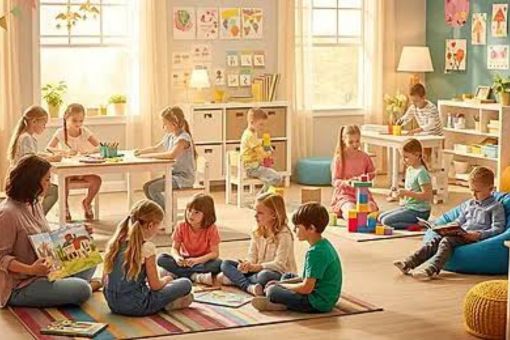
The modern “Play-Way” method relies heavily on incidental learning. When kids collaborate to build a wooden block tower, they aren’t just playing. They are intuitively grasping basic physics, practicing teamwork, and developing spatial awareness.
You might be able to teach your child shapes, colors, and numbers at home using flashcards. However, you cannot authentically replicate the dynamic friction and joy of a peer group navigating a shared task together.
How to Evaluate a Prospective Campus
Not all early learning centers are created equal. When touring campuses across the city, you need to look past the brightly painted walls and focus on operational realities.
- Observe the Teacher-to-Student Ratio: Smaller groups guarantee that your child receives personalized, patient attention during inevitable emotional meltdowns.
- Inspect the Facilities: Adequate outdoor play areas are mandatory, as physical exertion is crucial for cognitive rest and mental focus.
- Check Hygiene and Safety Protocols: Ensure access control, background-checked staff, and clean, child-friendly washrooms are top priorities.
Don’t hesitate to ask hard questions during your campus tour. A reputable institution will be entirely transparent about its safety measures and disciplinary philosophies.
Frequently Asked Questions (FAQs)
What is the right age to start nursery in Kolkata?
Children typically enroll in nursery programs between the ages of 3 and 4. This age is ideal for developing early social skills and adapting to a structured routine outside the home.
How do schools handle a child’s separation anxiety?
Top educators use a phased integration approach. They encourage short initial visits, allow comfort objects, and engage the child immediately in sensory play to gently distract and soothe them.
What is the main difference between preschool and nursery?
Nursery is often the first formal step within the broader preschool phase. While “preschool” covers ages 2 to 5, the nursery year specifically targets 3-to-4-year-olds with foundational play-based learning.
Does nursery education help with primary school admissions?
Yes. Children with prior early learning experience generally perform better in primary school interaction sessions. They showcase better behavioral regulation, confidence, and basic communication skills.
A Parent’s Final Takeaway
Letting go of your little one for a few hours a day can be a terrifying prospect. The anxiety is completely normal. Yet, watching them come home with a new vocabulary, new friends, and a sudden streak of independence makes it entirely worth the leap.
Nursery isn’t just a holding pen until “real” school begins. It is the very bedrock of their lifelong relationship with learning, curiosity, and society. Take your time, choose wisely, and watch them thrive.
Blog Development Credits:
This blog was envisioned by Soumyajit Sardar, created with research support from advanced AI platforms like ChatGPT, Gemini, and Copilot. Final editing and SEO expertise were provided by G.D. Birla Centre for Education.